
filesie

Author name: SaiKalyan Chakravarthy Anupindi

Email Marketing

How to Find Decision Makers at IT Companies

How to Find Decision Makers at IT Companies How to find decision makers at IT companies is an important part of successful B2B lead generation. Start by mapping the buying committee, identifying relevant executives on LinkedIn, enriching their profiles through reliable B2B contact databases, verifying business email addresses and approaching them with personalised outreach. When done in the right order, B2B prospecting becomes more focused and helps your sales team connect with the people who influence purchasing decisions. Why Finding Decision Makers at IT Companies Matters Imagine a cybersecurity company investing 18 months and $400,000 in B2B lead generation. Its marketing dashboard looks promising: 4,000 contacts generated, 600 engaged prospects and 40 meetings booked. However, only two deals convert into revenue. What went wrong? Most meetings were with engineers and analysts who understood the product but lacked the authority to approve the purchase. This highlights a common challenge in lead generation for IT companies: generating leads is relatively easy, but reaching the right decision makers is difficult. In technology purchasing decisions, multiple stakeholders are involved. The CTO may evaluate technical compatibility, the CISO may assess security risks, the CFO may approve the budget, and the VP of Engineering may influence the final selection. That is why successful lead generation strategies begin with identifying the people who influence purchasing decisions. A lead is not simply someone with a business email address. It is a relevant prospect with the authority, influence or responsibility to move a purchase forward. How to Find Decision Makers at IT Companies: A 5-Step Framework An effective B2B sales prospecting strategy follows five essential steps: MAP  →  IDENTIFY  →  ENRICH  →  VERIFY  →  ENGAGE Step 1: Map the Buying Committee Before searching for contacts, understand who participates in the purchasing process. In IT companies, decision-making responsibilities are often distributed across different roles.       Economic Buyer: CFO, CEO or business head responsible for approving budgets.       Technical Evaluator: CTO, IT Director or Solutions Architect responsible for evaluating technical requirements.       Internal Champion: VP of Engineering or department head who supports the solution.       Security Stakeholder: CISO or security director responsible for evaluating risks.       Procurement Stakeholder: Procurement manager responsible for vendor selection and purchasing procedures. The relevant decision makers depend on your product or service, company size and sales cycle. For example, a cybersecurity solution may require approval from the CISO, CTO and CFO, while a software development service may primarily involve the CTO, CIO or VP of Engineering. Understanding these roles helps you build a more targeted prospect list. Step 2: Finding IT Decision Makers Through LinkedIn Prospecting LinkedIn is one of the most useful platforms for identifying professionals working in IT companies. You can use LinkedIn Sales Navigator to narrow your search based on:       Job title and seniority       Industry and company size       Department and job function       Company headcount growth       Recent job changes       Geographic location For example, if you offer cloud infrastructure services, you can search for CTOs, CIOs, IT Directors and Heads of Infrastructure at technology companies. Pay attention to recent leadership changes, company announcements and executive posts. A newly appointed CTO may be evaluating existing technology systems or planning new initiatives, making this a useful opportunity for relevant outreach. The objective of LinkedIn prospecting is not simply to collect profiles. It is to understand who your potential buyers are and what matters to them. Step 3: Finding Decision Makers Using a B2B Contact Database LinkedIn helps identify decision makers, but finding their professional contact information can require additional research. This is where a B2B contact database becomes useful. These platforms can help businesses discover:       Professional business email addresses       Company contact information       Job titles and designations       Company size and industry       LinkedIn profile links       Department information Cross-check important records using multiple reliable sources before adding them to your outreach campaigns. A smaller list of relevant prospects is often more valuable than a large database containing outdated or irrelevant contacts. Step 4: Verifying Decision Maker Email Addresses Finding an email address does not guarantee that it is active or deliverable. Sending campaigns to unverified contacts can increase bounce rates and negatively affect your sender reputation. When searching for CTO email addresses or other executive contacts, follow a verification process:     Identify the executive’s professional email address.     Check the company’s email format.     Cross-reference the contact using reliable data sources.     Use an email verification tool to check deliverability.     Remove invalid and risky addresses before launching campaigns. Businesses conducting international B2B outreach should also consider applicable data protection and email marketing regulations, including GDPR and CAN-SPAM. Build appropriate compliance checks, opt-out processes and data-handling practices into your outreach workflow. This is general information, not legal advice; consult qualified legal professionals about your specific campaigns. Step 5: Engaging IT Decision Makers Through Personalised Outreach Identifying and verifying decision makers is only part of the process. The next challenge is getting their attention. Avoid sending generic messages that simply introduce your company and list its services. Instead, connect your message to the prospect’s business priorities:       CTO: Technology infrastructure, scalability and system performance.       CISO: Cybersecurity, data protection and compliance.       CFO: Cost optimisation, operational efficiency and ROI.       VP of Engineering: Development productivity, team performance and delivery timelines. Combine email, LinkedIn and phone outreach where appropriate. A personalised message that addresses a genuine business challenge has a stronger foundation than a generic sales pitch. How to Choose the Right B2B Data Providers B2B data providers help sales and marketing teams discover relevant business contacts. However, not every platform offers the same level of data quality. Before selecting a provider, evaluate the following criteria: Evaluation criteria What to check Data

Email Marketing

The Anatomy of a High-Quality B2B Cold Email

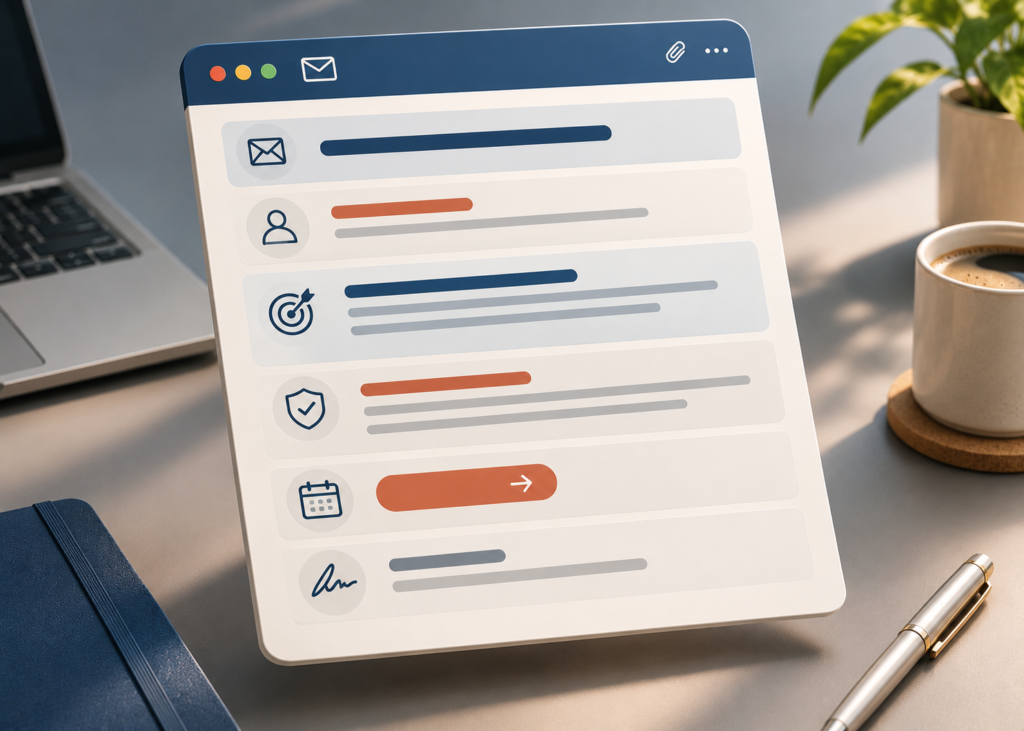
The Anatomy of a High-Quality B2B Cold Email Introduction Two representatives can send a B2B cold email to the same prospect on the same morning and get very different results. One message is deleted in seconds because it spends three paragraphs describing the sender’s company. The other earns a short reply because it is clearly written for the person reading it. In most cases, the difference is not cleverness. Instead, it comes down to structure. A high-quality B2B cold email is not a trick, a template to be copied or a guarantee of a response. It is a short, relevant and respectful message that gives a busy buyer a reason to reply. Understanding its parts helps a team write, review and improve outreach consistently. For B2B technology, IT services, SaaS, AI and cybersecurity teams, use the six parts below as a practical starting point. They sit within a wider repeatable sales development process, which shows where outreach fits in the pipeline. Why B2B cold email quality matters for sales leaders Every cold email speaks for your company to someone who has never heard of it. When each representative write Equally important, follow-ups should provide additional value. ites differently, good accounts get weak first impressions and leaders cannot tell which messages work. Careless sending adds risk: complaints, a damaged sender reputation and legal exposure. A shared standard for B2B outreach turns individual habit into something a leader can review, coach and measure. The six parts at a glance: an annotated B2B cold email Here is a short illustration, with placeholders in brackets. Replace each one with something you can verify. Subject: Vendor risk reviews at [Company] Hi [First name], I noticed [Company] recently opened a second data center region, which often means more vendors to assess in a short time. Teams in your position often find that security questionnaires slow down onboarding. We help IT services firms shorten that review cycle, and we recently helped a comparable [type of company] [specific, verifiable outcome]. Would it be useful if I shared a short example? [Name], [Role], [Company] If this isn’t relevant, reply “no thanks” and I won’t follow up. The email maps to the six parts explained next: Subject line: names a specific topic. Opening: a verified signal explains why this person. Problem: one hypothesis in the buyer’s language, plus one sentence on how you help. Proof: one result you can substantiate. Call to action: one easy question. Close: clear sender identity and a plain opt-out. 1. A B2B cold email subject line that sets honest expectations Keep the subject line short, specific and consistent with the body. Refer to a topic the recipient will recognize, not a vague promise or manufactured urgency. Fake “Re:” prefixes and misleading claims may win an open, but they cost trust and can breach anti-spam rules. Compare how these set expectations: Clearer: “Vendor risk reviews at [Company]” or “Question on your SOC 2 timeline” Weaker: “Quick question!!!” or “Re: our conversation” when there was no conversation When testing variations, change one element at a time and judge results by replies and meetings, not opens alone, because open data can be unreliable. 2. A B2B cold email opening that explains why this person The first line should show why you are writing to this individual. Connect to their role, their company’s situation or a verified signal, such as expansion, hiring, a product launch or a changing regulatory requirement. Personalization should make the message more relevant, not merely insert a name or mention a recent post. If you cannot find a genuine reason to contact the person, the answer is more research, not a more flattering opening line. Effective personalization connects an observable business development to a plausible challenge the recipient may need to address. Learn more about how cold email turns target accounts into sales conversations and how targeted outreach helps build meaningful B2B relationships.   3. A clear problem, not a product tour Name one plausible business issue in the buyer’s own language, in a sentence or two. Treat it as a hypothesis rather than an assertion: “Teams in your position often…” invites the reader to correct you, which is a better start than assuming you know their priorities. Follow with a single sentence on how you help. Resist the urge to list features, certifications and service lines. 4. Proof that is specific and verifiable Include one piece of relevant evidence: experience with a similar type of company, a concrete outcome you can substantiate or a short example of how a comparable problem was addressed. Claim only what you can support. Where confidentiality prevents naming a client, describe the context honestly rather than inflating the result. If you do not yet have proof for this segment, say less. A modest, accurate statement of relevant experience is more credible than a sweeping claim the reader cannot check. 5. One low-friction call to action for every B2B cold email Make a single, easy-to-answer request that matches the level of trust you have earned. “Would it be useful if I shared a short example?” is often easier to answer than a request for thirty minutes on a calendar. Multiple asks dilute the message and make a reply harder. A good call to action also makes it easy to decline. A prospect who can say “not now” politely is more likely to engage later than one who feels pressured. 6. A respectful close and a compliant foundation End with a clear signature showing your name, role and company, so the sender is easy to verify. Include a simple opt-out, honor requests promptly and keep suppression lists current. Follow the rules of the markets you serve, such as CAN-SPAM in the US, GDPR and national e-privacy rules in Europe and CASL in Canada, and confirm your approach with legal counsel. Adapting the B2B cold email structure to other situations The same six parts work when the trigger changes. Two short variations for a sales prospecting email: Subject: [Mutual contact] suggested

Email Marketing

Moving from Referrals to Proactive Sales: Build a Pipeline You Can Influence

Moving from Referrals to Proactive Sales: Build a Pipeline You Can Influence Introduction Moving from referrals to proactive sales helps B2B companies build a more predictable pipeline instead of depending entirely on customer recommendations and personal networks. Referrals are valuable because trust arrives before the first sales conversation. A recommendation from a satisfied customer, partner or industry contact can shorten the path to credibility and open doors that cold outreach may not. However, when referrals become the primary source of new business, growth can become difficult to plan. Some months bring several introductions; others are quiet, even when the team is delivering good work. The answer is not to stop asking for referrals. It is to stop depending on them as the only source of opportunity. A proactive sales approach gives a business more control over who it reaches, how consistently it starts conversations and how it develops opportunities. For B2B technology, IT services, SaaS, AI and cybersecurity companies, that means combining relationship-led selling with focused prospecting, relevant outreach and disciplined follow-up. Why Moving from Referrals to Proactive Sales Matters Referrals are often generated by past work, personal networks and timing. Although those sources can be powerful, they are not always controllable. A business may have an excellent reputation and still lack a reliable way to create conversations with new accounts in a chosen market or segment. Referral dependence can also narrow the growth strategy. Teams may spend most of their time serving existing customers and waiting for introductions instead of testing new industries, geographies or buyer groups. Revenue planning becomes harder when the next opportunity depends on someone else making a recommendation. Moving from referrals to proactive sales addresses this gap. It creates a repeatable activity system that identifies potential buyers, gives them a relevant reason to engage and moves suitable conversations towards a commercial next step. Salesforce’s overview of B2B sales prospecting describes prospecting as the work of identifying, researching and contacting potential buyers rather than waiting for interest to arrive. 1. Define Your Ideal Customers for Proactive Sales Proactive sales starts with focus, not a bigger contact list. First, define an ideal customer profile (ICP): the company types, size, location, business model and operating conditions that make your offer relevant. Next, identify the roles involved in the problem and the decision, including users, influencers and budget owners. More importantly, More importantly, be specific about the problem you solve.. An IT services firm might target companies modernising legacy systems; a cybersecurity provider might focus on organisations facing new compliance requirements; a SaaS business might target teams struggling with a manual workflow. These are starting hypotheses, not assumptions to treat as facts. Validate them through buyer conversations and campaign results. 2. Build and Prioritize Your Proactive Sales Account List Create a manageable list of accounts that match the ICP. Research each company’s services, markets, technology environment, growth activity and likely business priorities. Identify relevant decision-makers and verify their roles and contact details before outreach. Once the research is complete, prioritize accounts using consistent criteria: fit, evidence of a relevant problem, timing signals and access to the right stakeholders. Record why each account is included. A focused list of well-researched companies is more useful than a large database that has little connection to the offer. 3. Use Targeted Outreach to Build a Proactive Sales Pipeline Choose the channels that fit your audience and market: email, phone, LinkedIn, partner introductions or a coordinated combination. Therefore, Therefore, the message should explain why the contact is relevant, connect to a plausible business issue and offer a simple next step. Personalization is not inserting a first name; it is demonstrating that the outreach has a reason to exist. Use a documented sequence with appropriate spacing, useful follow-ups and clear stop rules. Track replies, objections and positive signals so the team can improve its messaging. Respect privacy requirements, anti-spam laws, opt-outs and platform rules in every market you serve. For practical guidance on designing a sales process, see Salesforce’s sales-process overview. 4. Balance Referrals with Proactive Sales Outreach Existing customers, delivery partners and professional networks remain important sources of high-trust opportunities. Build a deliberate referral habit: ask at appropriate moments, explain the type of customer who is a strong fit and make the introduction easy. A specific request is more actionable than simply asking whether someone knows anyone who might need your services. However, do not make the referral source responsible for your growth target.. Keep prospecting active whether referrals are flowing or not. This creates a balanced acquisition mix: referrals can provide warm introductions while proactive outreach helps reach accounts outside the current network. 5. Qualify Leads to Strengthen Your Proactive Sales Pipeline Effective lead qualification helps sales teams identify the right prospects, understand their needs and prioritize opportunities with greater potential. Learn more about lead qualification and how it works from Salesforce. Following a useful conversation, send a concise recap, confirm responsibilities and schedule the next action. Keep CRM records current so that follow-up does not depend on memory. Salesforce’s guidance on finding and qualifying leads highlights the importance of assessing fit and continuing engagement with promising prospects. 6. Manage Your Proactive Sales Pipeline Consistently A proactive sales system needs a steady operating rhythm. Set weekly targets for new accounts researched, relevant contacts identified, outreach completed, conversations started and qualified meetings held. Review these alongside outcomes such as opportunities created, stage conversion, pipeline value and revenue. Activity is a diagnostic measure; it is not proof of commercial progress. Additionally, review the pipeline every week. Identify where prospects are stalling, which segments respond, what objections recur and whether follow-up is happening on time. Use the findings to adjust targeting, messaging and qualification. A CRM should make this work visible, not become a place where activity is recorded without decisions being made. A Practical 30-Day Plan for Moving from Referrals to Proactive Sales In the first week, define the ICP, buyer roles and qualification criteria. In the second, build and prioritize a small target-account

Email Marketing

Measuring Pipeline Quality: Why Qualified Opportunities Matter More Than Lead Volume

Measuring Pipeline Quality: Why Qualified Opportunities Matter More Than Lead Volume Introduction Lead volume is a count: how many contacts entered the funnel during a period. Pipeline quality is an assessment of whether those contacts fit the target market, show meaningful interest, have a problem the business can solve and progress through the sales process. Neither measure is useless. Volume helps teams understand whether enough potential buyers are entering the system. Quality shows whether those buyers are likely to become commercial opportunities. The mistake is treating a high lead count or low cost per lead as proof of sales effectiveness. Alltake’s discussion of why pipeline quality matters more than lead volume makes a similar distinction between top-of-funnel activity and opportunities that can advance. Lead Volume vs. Pipeline Quality: Understand the Difference Lead volume is a count: how many contacts entered the funnel during a period. Pipeline quality is an assessment of whether those contacts fit the target market, show meaningful interest, have a problem the business can solve and progress through the sales process. Neither measure is useless. Volume helps teams understand whether enough potential buyers are entering the system. Quality shows whether those buyers are likely to become commercial opportunities. The mistake is treating a high lead count or low cost per lead as proof of sales effectiveness. Alltake’s discussion of why pipeline quality matters more than lead volume makes a similar distinction between top-of-funnel activity and opportunities that can advance. 1. Define What a Qualified Lead Means Quality cannot be measured consistently until marketing and sales agree on the definition. Start with the ideal customer profile: industry, company size, geography, business model and other firmographic characteristics that indicate a plausible fit. Then define buyer-level criteria, such as job role, influence over the decision and relevance to the problem being solved. Add evidence of need and timing. A prospect may match the company profile but have no current reason to act. Conversely, a person who downloads a resource may be curious rather than purchase-ready. Document the signals that matter and distinguish an inquiry, a marketing-qualified lead, a sales-accepted lead and a sales-qualified opportunity. The labels matter less than shared, observable criteria. 2. Track the Metrics That Reveal Pipeline Quality Use a small set of connected measures rather than a long dashboard of disconnected activity counts: Lead-to-conversation rate: the share of leads that result in a genuine two-way interaction. • Lead-to-meeting rate: the share that book and attend a relevant meeting. • Sales acceptance rate: the share of leads sales accepts as worth pursuing. • Lead-to-opportunity conversion: the share that become qualified opportunities in the CRM. • Stage conversion rate: the percentage of opportunities that advance from one defined stage to the next. • Win rate and sales cycle: the share of opportunities won and the time required to close them. • Cost per qualified opportunity: acquisition spend divided by the number of qualified opportunities created. Surface Labs’ guide to measuring lead quality, not just lead volume also emphasizes connecting lead capture to conversations, meetings and pipeline outcomes. The exact metrics and targets should reflect your sales model; do not adopt generic benchmarks without checking your own historical data. 3. Segment Results by Source, Audience and Campaign An overall conversion rate can hide important differences. Break results down by channel, campaign, industry, company size, geography, buyer role and offer. This helps answer practical questions: Are referrals producing fewer but stronger opportunities? Does outbound email reach the right decision-makers? Are paid campaigns attracting people who fit the ICP? Which segments progress beyond the first meeting? Compare cost per lead with cost per meeting and cost per qualified opportunity. A channel with a higher initial lead cost may produce stronger opportunities and better economics later. Avoid declaring a winner based only on the cheapest contact or the highest response rate. 4. Measure Pipeline Movement, Not Just Pipeline Size A healthy pipeline is not simply large; opportunities should move forward when buyers complete meaningful steps. Track stage entry dates, time spent in each stage, next-step dates, conversion rates and reasons for loss or disqualification. Deals that remain unchanged for long periods may indicate weak qualification, missing stakeholders, unclear value or a lack of urgency. Salesforce’s guide to building a healthy sales pipeline recommends monitoring qualification, pipeline flow, conversion and sales velocity. Use stage definitions that describe buyer progress, not just sales-representative activity. A meeting held should not automatically mean an opportunity has advanced. 5. Connect Marketing and Sales Data Pipeline quality is a shared responsibility. Marketing needs visibility into what happens after a lead is generated; sales needs to record outcomes consistently. Use CRM fields for source, campaign, ICP fit, qualification status, opportunity stage, disqualification reason and next step. Agree on response-time expectations and a feedback process for rejected or recycled leads. Review the data together. If a campaign produces many leads but few sales conversations, investigate targeting, contact accuracy, routing and follow-up speed before simply increasing spend. If meetings happen but opportunities do not emerge, review qualification and discovery. If opportunities stall later, examine buyer access, value alignment and decision processes. A Practical Monthly Pipeline Quality Review Once a month, review four questions: Are we attracting the right accounts? Are leads becoming real conversations? Are qualified conversations turning into opportunities? Are those opportunities progressing and converting? Compare results with prior periods and by source, then choose one or two changes to test. Do not abandon volume targets entirely. Instead, treat volume as an input and quality as the test of whether that input is useful. The objective is not the smallest possible lead list; it is a sufficient flow of relevant prospects that can realistically become customers. Conclusion: Optimize for Opportunities, Not Applause A large lead number can look impressive while concealing weak targeting, poor follow-up and low conversion. Measuring pipeline quality gives leadership a more useful view: which sources create qualified conversations, which opportunities progress and where the sales process loses momentum. When marketing and sales use shared definitions and

Email Marketing

From Prospecting to Pipeline: A Repeatable Sales Development Process

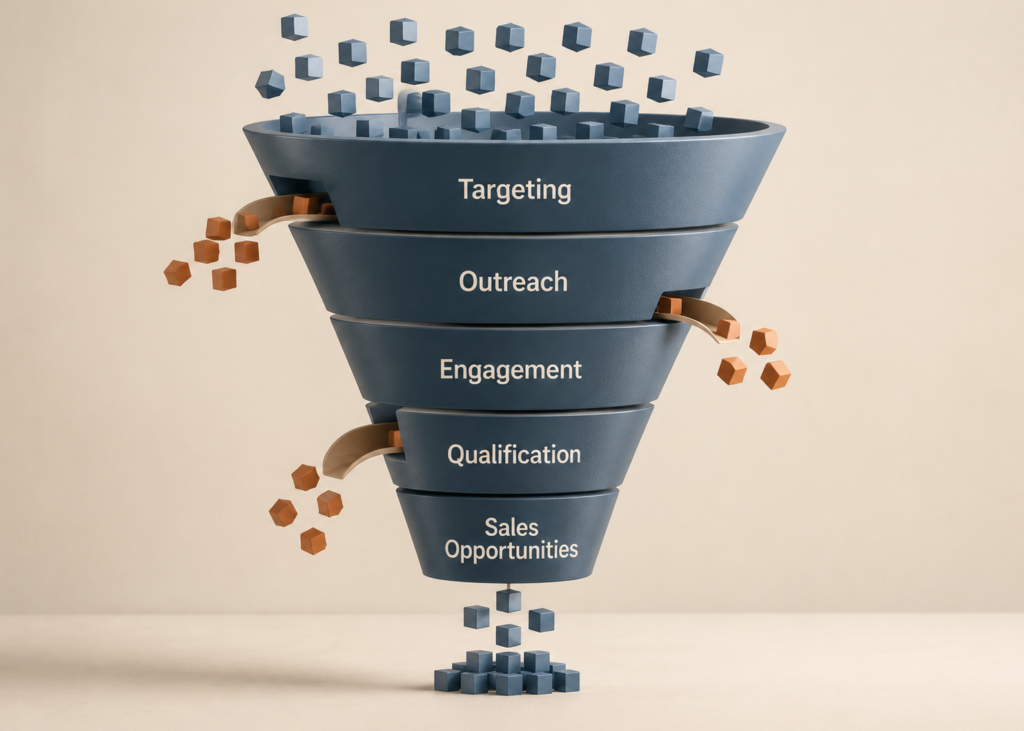
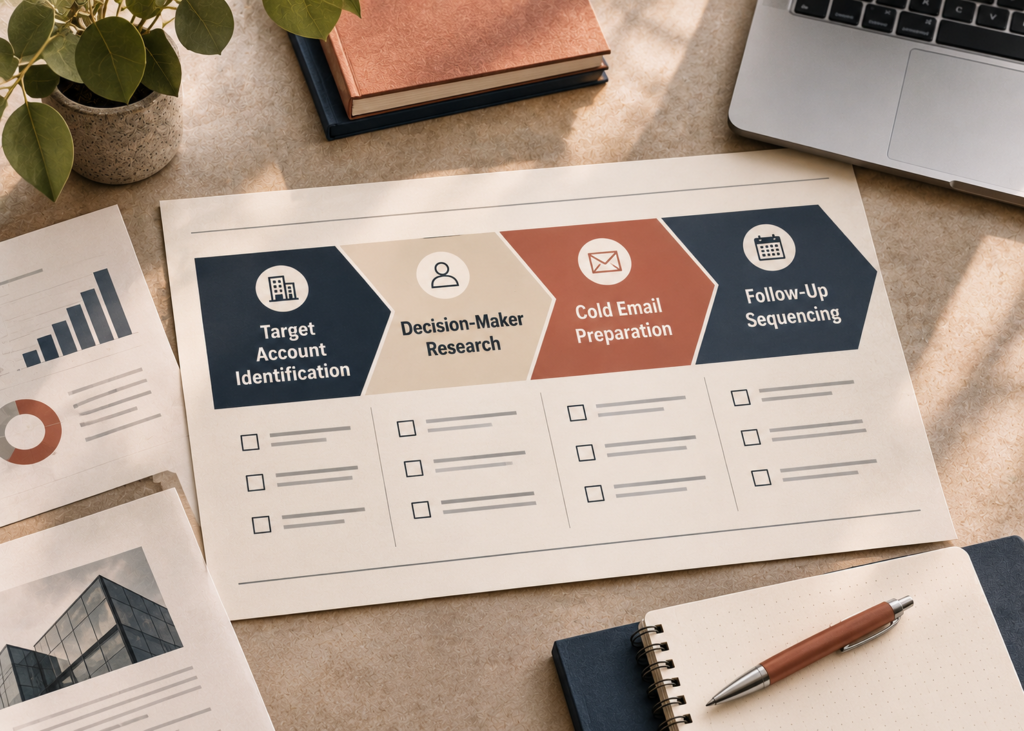
From Prospecting to Pipeline: A Repeatable Sales Development Process A repeatable sales development process helps B2B teams turn prospecting activity into qualified sales opportunities. Without a defined process, one representative may research accounts carefully while another sends generic messages. Some leads are qualified before a meeting, while others reach a sales call with little context. Follow-up can depend on individual habits rather than a shared system. A structured sales development process replaces this inconsistency with clear stages, ownership and measurable next steps. It does not make every deal predictable or turn selling into a script. Instead, it helps a team consistently identify suitable buyers, start relevant conversations and move qualified opportunities forward. For B2B technology, IT services, SaaS, AI and cybersecurity teams, this six-step checklist provides a practical starting point for building a more consistent sales pipeline. 1. Define Your Ideal Customer Profile for Sales Development Before building a list, agree on your ideal customer profile (ICP). Identify the company types, size, geography, business model and conditions that make your offer relevant. Then define the roles likely to feel the problem, influence the decision or approve a purchase. Keep the definition specific enough to guide research, but treat it as a hypothesis to test. Add relevant buying signals, such as expansion, a new product launch or a changing operational requirement, where evidence supports them. The aim is not simply to find contacts; it is to understand why a particular account may be a fit. 2. Research and Prioritize Accounts Through a Structured Prospecting Process Create a focused account list and gather only information that helps you make a relevant approach. Check the company’s services, markets, likely business priorities and recent developments. Identify the right contact and verify their role and contact details. Prioritize accounts using consistent criteria, such as fit, strength of the business problem, timing signals and access to relevant decision-makers. Record the reason each account belongs on the list. This makes prioritization explainable and helps the team learn which signals correlate with meaningful conversations. For additional guidance, see Salesforce’s guide to B2B sales prospecting. 3. Start Relevant Conversations With a Consistent Outreach Process Choose an appropriate channel—email, phone, LinkedIn, referral or a combination—and adapt the message to the context. Effective outreach explains why you are contacting this person, connects to a plausible business issue and offers a clear, low-friction next step. Personalization should make the message more relevant, not merely insert a name or mention a recent post. Use a documented sequence with sensible spacing and clear stop rules. Respect opt-outs, privacy requirements, anti-spam laws and each platform’s rules in the markets you serve. Track responses and objections so messaging improves with evidence rather than guesswork. 4. Qualify Prospects Before Advancing the Sales Pipeline A reply or booked meeting is not automatically a sales-qualified opportunity. Establish whether the account fits, whether a problem exists that your solution can address, who is involved in the decision and whether there is a plausible next step. Ask questions conversationally; qualification should feel like a useful discussion, not an interrogation. If there is a fit but no immediate priority, agree on an appropriate follow-up or nurture path. If there is no fit, record the reason and move on. Clear qualification protects the prospect’s time and prevents the pipeline from filling with opportunities that are unlikely to progress. Salesforce explains the role of need, budget, timing and decision-making authority in its guidance on building a sales process. 5. Use Discovery to Build Value and Agree on Next Steps Once qualified, use discovery to understand the current situation, impact of the problem, desired outcome, constraints and decision process. Reflect the prospect’s priorities back to them before recommending a solution. A proposal should connect the scope, expected deliverables, responsibilities, timeline and commercial terms to the problem discussed. End every substantive conversation with a mutually understood next step and owner. That may be a technical review, stakeholder meeting, proposal revision or decision date. Send a concise recap and deliver any promised information promptly. Advance a deal in the CRM when the agreed stage criteria are met, not merely because a meeting occurred. 6. Measure Sales Development Performance and Improve the Process A repeatable sales development process needs feedback. Track leading indicators, such as accounts researched and relevant conversations started, alongside outcomes: meetings held, qualified opportunities created, stage conversion, pipeline value and closed revenue when the sales cycle allows. Use activity metrics to diagnose execution, not as a substitute for commercial results. Review where prospects stall, which reasons for disqualification recur and which messages lead to meaningful conversations. Update the process when evidence suggests a change, document the new standard and coach the team on it. Salesforce’s sales-process guidance similarly emphasizes research, prospecting, qualification, sales conversations, closing and continued improvement. Sales Development Process: A Simple Implementation Checklist Define the ICP, buyer roles and qualification criteria. Document each stage, its owner and the evidence required to move forward. Use consistent CRM fields and record next steps after every meaningful interaction. Review activity and outcome metrics together on a regular schedule. Share feedback between sales development, sales and marketing. The strongest sales development process is not necessarily the most complicated. It is the one a team can follow, measure and improve without relying on one person’s memory or instinct. Start with a manageable version, identify bottlenecks and refine it as your market knowledge grows. Want to make your sales development process more consistent? Book a sales development strategy call with Filesie to discuss your target accounts, prospecting workflow, qualification criteria and pipeline goals. Frequently Asked Questions About the Sales Development Process What is a sales development process? A sales development process is a documented set of activities and decision criteria that helps a team identify potential buyers, engage them, qualify interest and create a useful handoff into the sales process. What is the difference between a sales process and a sales methodology? The process defines the stages and expected outcomes. A methodology describes how a salesperson conducts the

Email Marketing

Why B2B Lead Generation Fails: 7 Problems and How to Fix Them

Why B2B Lead Generation Fails: 7 Problems and How to Fix Them B2B lead generation fails when targeting, messaging, qualification and follow-up do not work together. Teams can build prospect lists, send emails and book meetings without creating a healthy sales pipeline. However the solution is not necessarily more activity; it is identifying where the process breaks down and fixing the underlying problem. For technology, IT services, B2B SaaS, AI and cybersecurity companies, understanding why B2B lead generation fails is essential to creating a repeatable process for identifying potential buyers, starting relevant conversations and converting qualified interest into sales opportunities. In this article, Here are seven common B2B lead generation problems, along with practical ways to address them. 1. B2B Lead Generation Fails When Your Ideal Customer Profile Is Unclear An ideal customer profile (ICP) defines the types of companies most likely to benefit from your solution. When the ICP is too broad, outreach becomes generic. When it is too narrow, the addressable market may be unnecessarily restricted. How to fix it: Define target industries, company sizes, geographies and business models. Identify the business problems your solution addresses. Map relevant decision-makers and buying stakeholders. Use observable buying signals to prioritize accounts. Review the ICP against actual sales conversations and outcomes. Treat buying signals as hypotheses to validate, not proof that a company is ready to purchase. 2. Scaling Outreach Before Validating the Offer Sending more emails cannot compensate for an unclear value proposition. If prospects do not understand the problem you solve or why it matters to them, increasing outreach volume is unlikely to resolve the underlying issue. How to fix it: Select one target segment. Define a specific business problem and relevant offer. Test different message angles with a focused audience. Review replies and objections for recurring patterns. Refine the offer before expanding the campaign. The objective is to establish relevance before increasing volume. 3. B2B Lead Generation Tools Cannot Replace Strategy Sales engagement platforms, prospect databases, CRM systems and AI tools can improve execution. However, they cannot independently determine which customers to target, what message will resonate or how to qualify an opportunity. How to fix it: Establish a clear operating framework before adding more tools: Ideal customer profile and account selection criteria. Buyer personas and problem hypotheses. Offer positioning and messaging. Outreach sequences and channel selection. Qualification criteria and follow-up rules. Measurement and reporting standards. Also, ensure your prospecting and outreach processes comply with applicable privacy, data protection and anti-spam requirements in each target market. 4. Measuring Activity Instead of B2B Sales Pipeline Email volume, connection requests and booked meetings measure activity. They do not necessarily demonstrate that lead generation is producing qualified sales opportunities. Teams should evaluate both campaign execution and commercial outcomes. How to fix it: Track metrics such as: Meetings booked and meetings held. Percentage of meetings that match the ICP. Qualified opportunities created. Conversion rates between pipeline stages. Pipeline value and opportunity progression. Closed revenue and customer acquisition cost, where measurable. Use consistent qualification criteria so sales and marketing evaluate lead quality in the same way. Salesforce also provides guidance on lead qualification. 5. Personalization Without Buyer Relevance Adding a prospect’s first name, company name or recent LinkedIn post is not necessarily meaningful personalization. Effective outreach connects a relevant business observation to a problem the prospect may need to solve. How to fix it: Before sending a message, answer three questions: Why this company? Why this person? Why might this matter now? Use relevant company context to develop a credible business hypothesis. Keep the message concise and make it easy for the recipient to decide whether the conversation is worth having. 6. Inconsistent Lead Qualification and Follow-Up A positive reply or an introductory meeting does not automatically indicate a qualified opportunity. Without shared criteria, sales teams can waste time on prospects who lack a relevant need, suitable timing or decision-making authority. How to fix it: Define what makes a lead qualified. Record the prospect’s business problem and current priorities. Establish clear next steps after each conversation. Follow up consistently without sending irrelevant messages. Nurture prospects who may be suitable later. Review disqualification reasons to improve targeting. A consistent process helps the team distinguish between initial interest and genuine sales potential. 7. Disconnected Channels Weaken B2B Lead Generation Cold email, LinkedIn outreach, content, paid campaigns, referrals and partnerships can support one another. When these channels operate independently, teams may use inconsistent messages, duplicate effort and miss opportunities to learn from buyer responses. How to fix it: Align messaging around the same buyer problems and value proposition. Coordinate account selection across relevant channels. Use campaign responses to improve content and sales conversations. Keep prospect and opportunity records consistent. Evaluate which channels contribute to qualified opportunities. A connected approach creates a clearer picture of what attracts the right buyers and moves them towards a sales conversation. A Practical Checklist to Fix B2B Lead Generation Before increasing campaign volume, review these fundamentals: ICP: Are we targeting the right companies and decision-makers? Timing: Is there a credible reason for contacting these accounts now? Offer: Is the business value clear and relevant? Validation: Have we tested the messaging with a focused audience? Data and execution: Are contact data, outreach processes and systems reliable? Qualification: Do we consistently identify genuine opportunities? Measurement: Are we tracking opportunity quality as well as activity? Learning: Are campaign results informing the next round of improvements? The operating principle is straightforward: diagnose, validate, measure, optimize, then scale. Do not immediately add more contacts, tools or channels when results are weak. First identify the weakest part of the process, test a targeted improvement and measure whether lead quality improves. The approach may also differ by geography. Buyer expectations, outreach norms, privacy requirements and sales cycles can vary across the United States, United Kingdom, Canada, Australia, the UAE and South Africa. Predictable lead generation does not mean guaranteeing a fixed number of meetings or deals. It means building a process that can be measured, improved and

Email Marketing

How Cold Email Turns Target Accounts into Sales Conversations

How Cold Email Turns Target Accounts into Sales Conversations An IT services company can use cold email outreach to connect with thousands of potential buyers, but still struggle to secure conversations with decision-makers. Sales teams send emails, follow up consistently, and report increasing activity, yet qualified opportunities remain limited. A well-planned cold email outreach strategy helps businesses identify relevant target accounts, reach the right decision-makers, and create meaningful sales conversations. The issue may not be the size of the database. It could be the relevance of the accounts being pursued, the people receiving the messages, or the reasons given for starting a conversation. Effective cold email outreach requires a clear understanding of which companies are most likely to need a service, what challenges they may face, and why a conversation would be worthwhile. When these factors align, outbound activity becomes more than a series of emails. It becomes a structured way to identify potential buyers and develop business opportunities. 1. Why Target Account Selection Matters in B2B Sales A large prospect database creates possibilities, but it does not automatically generate a sales pipeline. Its value depends on how effectively a company identifies and prioritizes potential buyers. Consider an IT services provider offering cloud migration and infrastructure modernization. Its database includes thousands of technology companies, from early-stage startups to established enterprises. Contacting every company with the same message would consume sales resources without accounting for differences in technical requirements, budgets, or purchasing priorities. A more focused approach evaluates potential accounts using three factors: Business fit: Does the company have the technology environment, operating model, or business complexity that makes the service relevant? Potential value: Could the relationship justify the resources required to pursue and serve the account? Buying signals: Is there an observable development, such as cloud expansion, a new technology initiative, or relevant hiring activity, that creates a credible reason to connect? These signals do not guarantee purchase intent. They help sales teams identify accounts worth investigating. For example, an enterprise expanding its cloud infrastructure may be a more relevant prospect for migration support than a company with no visible need for infrastructure changes. Prioritizing the former gives the sales team a clearer reason to make contact. The objective is not simply to shorten the prospect list. It is to focus attention on accounts where business fit, potential value, and a credible reason to engage intersect. 2. How Account Research Makes Cold Emails More Relevant After selecting a target account, the next step is identifying the right stakeholders and understanding what matters to them. A company’s technology requirements may concern its CTO, while budget approval may involve its CFO or another executive. Department heads can also influence purchasing decisions without having final approval authority. Reaching the wrong stakeholder can delay progress, even when the service itself is relevant. Account research helps establish both whom to contact and why the conversation might be useful. Useful sources of context include company announcements, expansion plans, technology initiatives, hiring patterns, and publicly stated business priorities. The goal is not to collect as much information as possible. It is to find a meaningful connection between the company’s circumstances and the sender’s capabilities. This is what separates genuine personalization from superficial customization. Adding a recipient’s name or mentioning a recent company announcement does little if the rest of the email could be sent unchanged to hundreds of other businesses. Effective personalization connects an observable business development to a plausible challenge the recipient may need to address. For instance, an IT consultancy contacting a company hiring several cloud engineers could explore whether its expanding infrastructure creates additional implementation or modernization requirements. The hiring activity provides context, but the email should not assume that the company has a problem. A relevant message acknowledges what is observable, explains where the sender may be useful, and allows the recipient to determine whether the need exists. 3. How Cold Email Outreach Starts Sales Conversations A successful B2B cold email gives the recipient a reason to consider a conversation without requiring them to read through a lengthy sales pitch. Four elements help achieve this: A relevant opening: Establish a connection to the recipient’s business context. A credible reason for contact: Explain why the conversation may be worthwhile. A clear business connection: Show how the service could address a relevant operational or commercial challenge. A simple next step: Invite a brief discussion without demanding a major commitment. The message should focus on the recipient’s situation rather than the sender’s company history, service catalogue, or list of achievements. Credentials can establish credibility, but they rarely provide the initial reason to engage. Consider this example: Subject: Supporting Cloud Expansion Hi [Name], I noticed your team is expanding its cloud engineering capabilities. As infrastructure grows, maintaining consistency across migration, deployment, and ongoing operations can become more complex. We help technology teams address cloud implementation and optimization challenges. Would a brief conversation be useful to explore whether this is relevant to your current plans? Regards, [Name] The email connects an observable development to a potential business challenge, explains the sender’s relevance, and offers a straightforward next step. It does not assume the recipient needs help or promise results without evidence. The objective is to establish enough relevance for the recipient to decide whether further discussion makes sense. 4. Why Follow-Ups Are Part of the Sales Strategy An unanswered email provides limited information. The recipient may be occupied, the timing may be unsuitable, or the message may not have established enough relevance. Silence alone does not reveal which explanation applies. A thoughtful follow-up gives the sender another opportunity to demonstrate value. However, repeating the original pitch with a different subject line rarely adds much. Each subsequent message should contribute something useful. One follow-up might clarify the business challenge being addressed, while another could introduce a relevant use case or explain a specific consideration for the recipient’s industry. For example, an initial email about cloud modernization could be followed by a concise note about managing migration complexity during

Email Marketing

The Complete Cold Email Outreach Process for B2B IT Companies

The Complete Cold Email Outreach Process for B2B IT Companies A technology company can have 50,000 prospects and still struggle to book qualified meetings. Cold Email Outreach for IT Companies works best when businesses reach the right decision-makers with relevant messages and a clear reason to start a conversation. Instead of sending generic emails, companies need a structured process that turns potential buyers into qualified sales opportunities. 1. The Core Paradox: More Outreach Can Produce Less Pipeline Imagine an IT services company offering cloud transformation. It has 20,000 contacts but very few qualified meetings. A company looking for basic IT support may have little interest in a complex cloud migration. A message sent to someone outside the buying process is unlikely to move forward. Cold Email Outreach for IT Companies starts with relevance: who has the problem, why it matters now, and whether the business can help. A useful process looks like this. It keeps Cold Email Outreach for IT Companies connected to the sales outcome: Market → ICP → Data → Segmentation → Offer → Message → Sequence → Revenue 2. Cold Email Outreach Strategy: From Market to Meeting Step 1: Define Your ICP for Effective Cold Email Outreach Before collecting email addresses, decide what a good-fit customer looks like. A cybersecurity SaaS provider, for example, might target North American SaaS companies with 200–1,000 employees, enterprise customers, and upcoming compliance requirements. That is more useful than targeting every business that calls itself a technology company. A clear ideal customer profile (ICP) helps sales teams focus on accounts with a credible reason to buy. It gives Cold Email Outreach for IT Companies a much stronger starting point. A targeted outreach campaign should also involve exclusion : if an account clearly does not fit, leave it out. Step 2: Build a Buyer-Specific Email Database Finding the right company is only part of the job. You also need to identify the people involved in the decision. In a cloud project, a CTO may approve the investment, engineering may deal with day-to-day issues, and Finance may review the budget. Relevant B2B email outreach is more likely to start a useful conversation  when the message reflects the recipient’s responsibilities. Verify email addresses, check job titles, remove duplicates, and update outdated records. Step 3: Segment Prospects for Targeted Email Outreach Prospects in the same industry can have very different priorities. An IT services company might contact SaaS businesses entering enterprise markets, firms expanding into new countries, and companies growing their engineering teams. Segment around the problem or buying trigger, not just the industry. This approach makes each email feel relevant to the group. This gives Cold Email Outreach for IT Companies a specific point of view and makes personalization easier without writing every email from scratch. Step 4: Offer a Useful Next Step Think about what would make a prospect want to reply. Suppose an IT services provider notices SaaS companies expanding into Europe. Instead of immediately pitching a cloud migration project, it could offer a short infrastructure-readiness review. That gives Cold Email Outreach for IT Companies a clear purpose. Cold Email Outreach for IT Companies is stronger when there is a credible reason to talk, not just a bigger promise. Avoid claims you cannot support. Step 5: Write Effective Cold Emails for IT Decision-Makers Senior buyers rarely have time for long introductions and paragraphs of product features. Get to the point, explain why you are contacting them, and make the next step easy. For example: “Noticed your team has expanded into three new markets this year. That can put extra pressure on cloud governance. We recently helped a similar SaaS team identify gaps before they became infrastructure costs. Worth comparing notes?” Cold Email Outreach for IT Companies should sound like one professional writing to another: clear, credible, and focused on a problem the recipient may recognize. Avoid inflated claims and vague lines such as “I’d love to pick your brain.” This keeps Cold Email Outreach for IT Companies direct and credible. Step 6: Improve Cold Email Deliverability A good copy cannot help if the email never reaches the inbox. If replies suddenly drop, check deliverability before rewriting every message. Keep contact data clean, monitor bounces, and follow email-provider requirements and applicable regulations. These checks support Cold Email Outreach for IT Companies over the long term. Cold Email Outreach for IT Companies needs a sound technical foundation as well as relevant messaging. For further guidance, consult Google’s Email sender guidelines and the UK Information Commissioner’s Office guidance on direct marketing and electronic mail. Step 7: Use Follow-Up Emails to Improve Outreach Results For a cybersecurity campaign, the first email might mention a compliance trigger. Each follow-up should add something useful, such as a common implementation gap, a relevant benchmark, or a question about how the company handles the issue today. Over time, Cold Email Outreach for IT Companies should become a process the team learns from, not a fixed sequence sent to every list. 3. Measuring the Business Impact Reply volume alone can be misleading. Consider two campaigns: Campaign A: 20,000 emails → 800 replies → 40 qualified meetings. Campaign B: 8,000 emails → 200 replies → 60 qualified meetings. Campaign B books more qualified meetings with fewer emails. If the goal is pipeline, that is a stronger result. Measure deliverability, positive response rate, qualified meetings, opportunity conversion, pipeline value, customer acquisition cost (CAC), sales velocity, and revenue. These measures show whether Cold Email Outreach for IT Companies is contributing to the pipeline. For Cold Email Outreach for IT Companies, the useful question is not just “How many people replied?” but “How many conversations moved the business forward?” Fewer replies can still mean better results if they come from suitable buyers and turn into opportunities. 4. The Strategic Takeaway Cold Email Outreach for IT Companies works best when account selection, buyer research, messaging, deliverability, follow-up, and measurement work together. Before increasing volume, check whether the target accounts fit your ICP, the message gives buyers

    This will close in 0 seconds