
Moving from Referrals to Proactive Sales: Build a Pipeline You Can Influence
Introduction
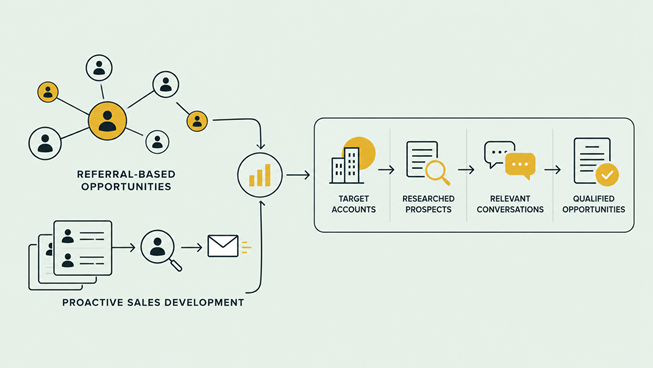
Moving from referrals to proactive sales helps B2B companies build a more predictable pipeline instead of depending entirely on customer recommendations and personal networks. Referrals are valuable because trust arrives before the first sales conversation. A recommendation from a satisfied customer, partner or industry contact can shorten the path to credibility and open doors that cold outreach may not.
However, when referrals become the primary source of new business, growth can become difficult to plan. Some months bring several introductions; others are quiet, even when the team is delivering good work.
The answer is not to stop asking for referrals. It is to stop depending on them as the only source of opportunity. A proactive sales approach gives a business more control over who it reaches, how consistently it starts conversations and how it develops opportunities. For B2B technology, IT services, SaaS, AI and cybersecurity companies, that means combining relationship-led selling with focused prospecting, relevant outreach and disciplined follow-up.
Why Moving from Referrals to Proactive Sales Matters
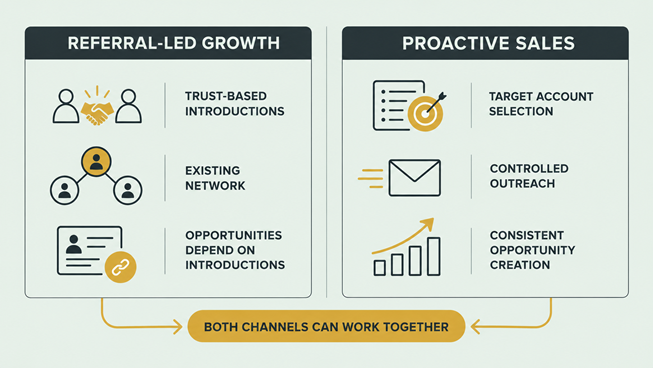
Referrals are often generated by past work, personal networks and timing. Those sources can be powerful, but they are not always controllable. A business may have an excellent reputation and still lack a reliable way to create conversations with new accounts in a chosen market or segment.
Referral dependence can also narrow the growth strategy. Teams may spend most of their time serving existing customers and waiting for introductions instead of testing new industries, geographies or buyer groups. Revenue planning becomes harder when the next opportunity depends on someone else making a recommendation.
Moving from referrals to proactive sales addresses this gap. It creates a repeatable activity system that identifies potential buyers, gives them a relevant reason to engage and moves suitable conversations towards a commercial next step. Salesforce’s overview of B2B sales prospecting describes prospecting as the work of identifying, researching and contacting potential buyers rather than waiting for interest to arrive.
1. Define Your Ideal Customers for Proactive Sales
Proactive sales starts with focus, not a bigger contact list. Define an ideal customer profile (ICP): the company types, size, location, business model and operating conditions that make your offer relevant. Then identify the roles involved in the problem and the decision, including users, influencers and budget owners.
Be specific about the problem you solve. An IT services firm might target companies modernising legacy systems; a cybersecurity provider might focus on organisations facing new compliance requirements; a SaaS business might target teams struggling with a manual workflow. These are starting hypotheses, not assumptions to treat as facts. Validate them through buyer conversations and campaign results.
2. Build and Prioritize Your Proactive Sales Account List
Create a manageable list of accounts that match the ICP. Research each company’s services, markets, technology environment, growth activity and likely business priorities. Identify relevant decision-makers and verify their roles and contact details before outreach.
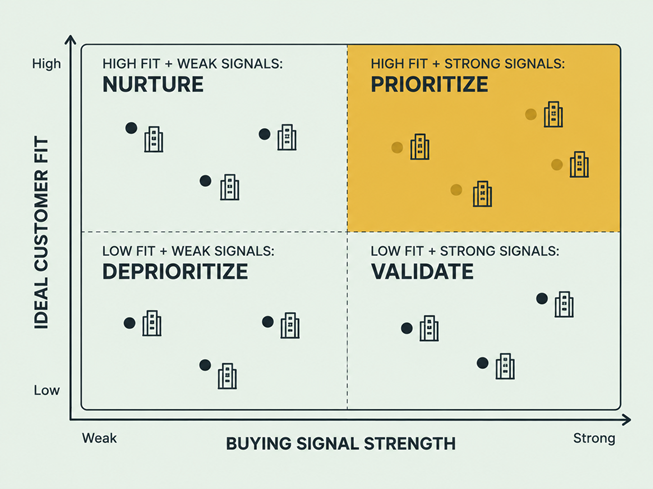
Prioritize accounts using consistent criteria: fit, evidence of a relevant problem, timing signals and access to the right stakeholders. Record why each account is included. A focused list of well-researched companies is more useful than a large database that has little connection to the offer.
3. Use Targeted Outreach to Build a Proactive Sales Pipeline
Choose the channels that fit your audience and market: email, phone, LinkedIn, partner introductions or a coordinated combination. The message should explain why the contact is relevant, connect to a plausible business issue and offer a simple next step. Personalization is not inserting a first name; it is demonstrating that the outreach has a reason to exist.
Use a documented sequence with appropriate spacing, useful follow-ups and clear stop rules. Track replies, objections and positive signals so the team can improve its messaging. Respect privacy requirements, anti-spam laws, opt-outs and platform rules in every market you serve.
For practical guidance on designing a sales process, see Salesforce’s sales-process overview.
4. Balance Referrals with Proactive Sales Outreach
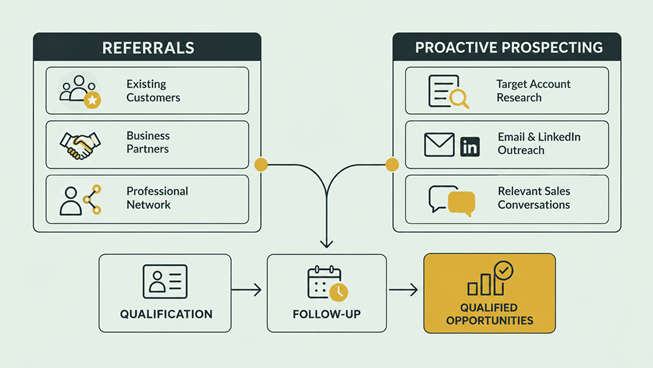
Existing customers, delivery partners and professional networks remain important sources of high-trust opportunities. Build a deliberate referral habit: ask at appropriate moments, explain the type of customer who is a strong fit and make the introduction easy. A specific request is more actionable than simply asking whether someone knows anyone who might need your services.
At the same time, do not make the referral source responsible for your growth target. Keep prospecting active whether referrals are flowing or not. This creates a balanced acquisition mix: referrals can provide warm introductions while proactive outreach helps reach accounts outside the current network.
5. Qualify Leads to Strengthen Your Proactive Sales Pipeline
Effective lead qualification helps sales teams identify the right prospects, understand their needs and prioritize opportunities with greater potential. Learn more about lead qualification and how it works from Salesforce.
After a useful conversation, send a concise recap, confirm responsibilities and schedule the next action. Keep CRM records current so that follow-up does not depend on memory. Salesforce’s guidance on finding and qualifying leads highlights the importance of assessing fit and continuing engagement with promising prospects.
6. Manage Your Proactive Sales Pipeline Consistently
A proactive sales system needs a steady operating rhythm. Set weekly targets for new accounts researched, relevant contacts identified, outreach completed, conversations started and qualified meetings held. Review these alongside outcomes such as opportunities created, stage conversion, pipeline value and revenue. Activity is a diagnostic measure; it is not proof of commercial progress.
Review the pipeline every week. Identify where prospects are stalling, which segments respond, what objections recur and whether follow-up is happening on time. Use the findings to adjust targeting, messaging and qualification. A CRM should make this work visible, not become a place where activity is recorded without decisions being made.
A Practical 30-Day Plan for Moving from Referrals to Proactive Sales
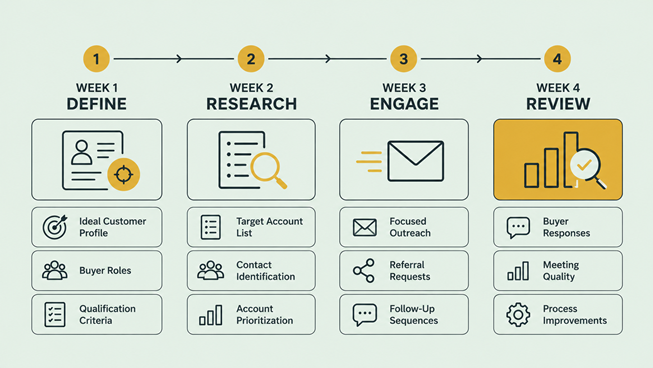
In the first week, define the ICP, buyer roles and qualification criteria. In the second, build and prioritize a small target-account list. In the third, launch a focused outreach sequence and continue asking for relevant referrals. In the fourth, review responses, meetings, objections and next steps; then refine the list and messaging before repeating the cycle.
The goal of the first month is not to prove that one channel can replace another. It is to establish a consistent process, learn which buyers respond and create a pipeline that does not rely entirely on introductions arriving at the right time.
Conclusion: Make Growth Less Dependent on Chance
Moving from referrals to proactive sales does not mean abandoning relationship-based business development. Referrals should remain an important part of a healthy B2B acquisition strategy. But sustainable growth requires a way to create opportunities beyond the relationships a business already has.
By defining target accounts, researching buyers, starting relevant conversations, qualifying carefully and reviewing performance, teams can build a sales motion they can influence and improve.
Want to build a more consistent source of B2B sales conversations? Explore Filesie’s cold email outreach service or visit Filesie to discuss target-account selection, outreach execution and pipeline development.
Frequently Asked Questions
Are referrals better than proactive sales outreach?
Neither channel is universally better. Referrals often bring trust and context, while proactive outreach gives a business a way to reach selected accounts beyond its existing network. A balanced strategy uses both.
How can a small B2B company start proactive selling?
Start with a clearly defined ideal customer profile, a focused list of target accounts and a manageable weekly outreach routine. Measure qualified conversations and follow-up rather than relying only on message volume.
How much time should a team spend on prospecting?
The right allocation depends on sales-cycle length, deal size and team capacity. The important point is to protect recurring time for prospecting instead of allowing existing opportunities and delivery work to consume the entire week.
Should a business stop asking for referrals once it starts outbound sales?
No. Continue asking satisfied customers and partners for relevant introductions. Proactive prospecting should diversify opportunity sources, not eliminate relationship-led growth.