
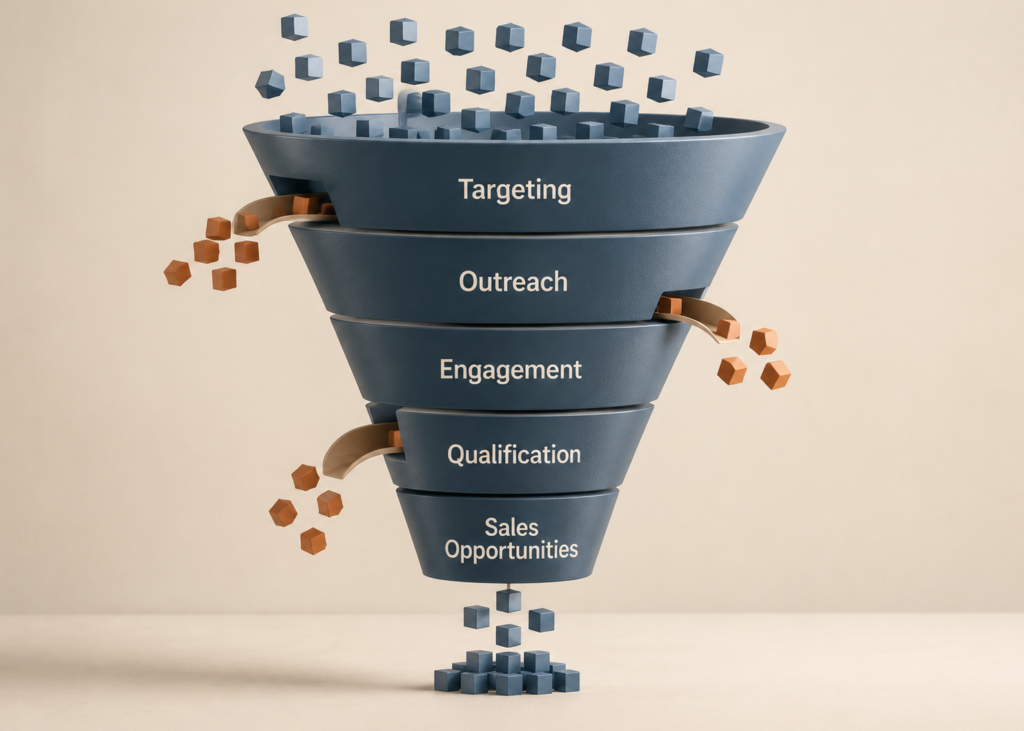
Why B2B Lead Generation Fails: 7 Problems and How to Fix Them

B2B lead generation fails when targeting, messaging, qualification and follow-up do not work together. Teams can build prospect lists, send emails and book meetings without creating a healthy sales pipeline. However the solution is not necessarily more activity; it is identifying where the process breaks down and fixing the underlying problem.
For technology, IT services, B2B SaaS, AI and cybersecurity companies, understanding why B2B lead generation fails is essential to creating a repeatable process for identifying potential buyers, starting relevant conversations and converting qualified interest into sales opportunities.
In this article, Here are seven common B2B lead generation problems, along with practical ways to address them.
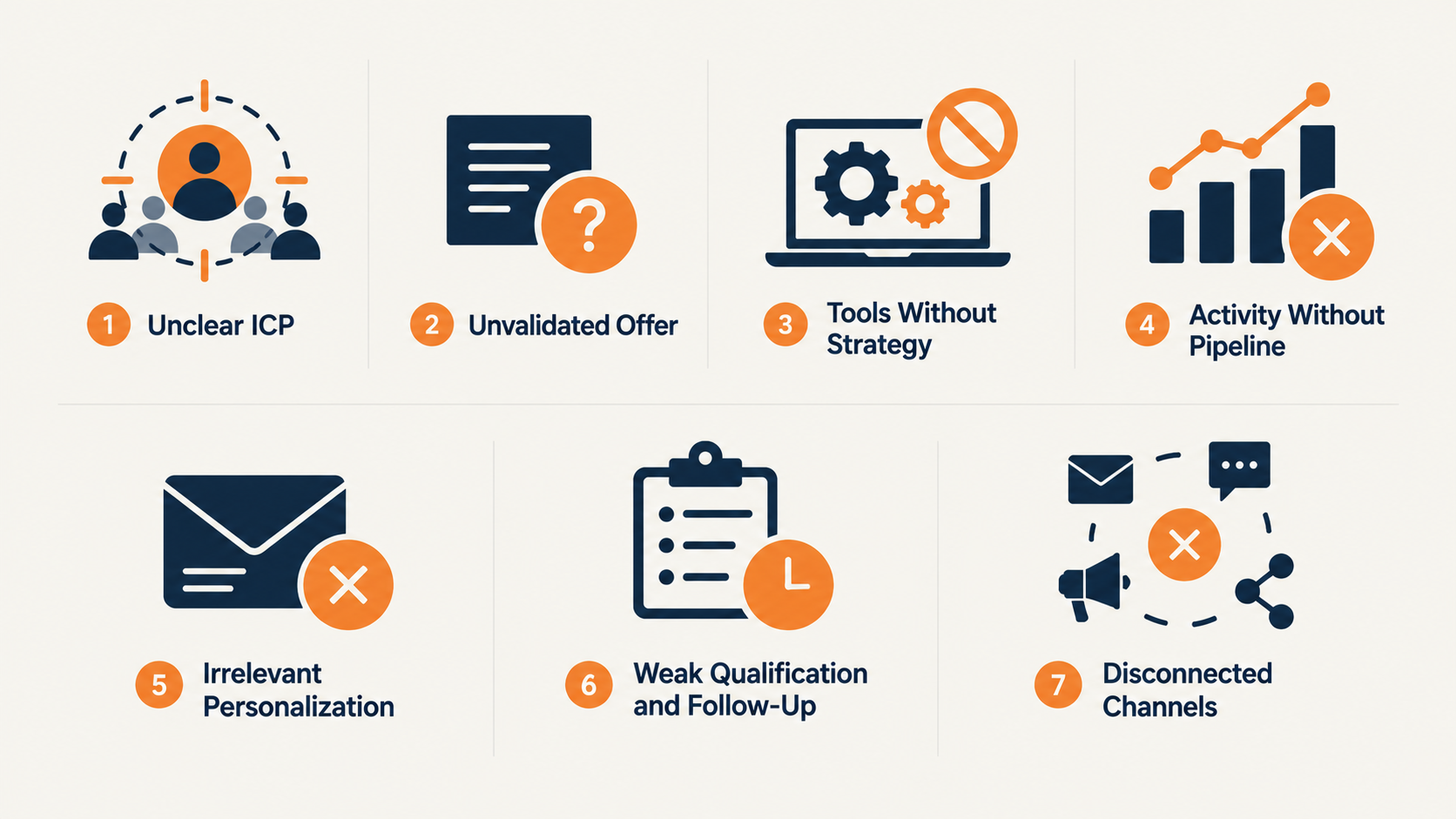
1. B2B Lead Generation Fails When Your Ideal Customer Profile Is Unclear
An ideal customer profile (ICP) defines the types of companies most likely to benefit from your solution. When the ICP is too broad, outreach becomes generic. When it is too narrow, the addressable market may be unnecessarily restricted.
How to fix it:
- Define target industries, company sizes, geographies and business models.
- Identify the business problems your solution addresses.
- Map relevant decision-makers and buying stakeholders.
- Use observable buying signals to prioritize accounts.
- Review the ICP against actual sales conversations and outcomes.
Treat buying signals as hypotheses to validate, not proof that a company is ready to purchase.
2. Scaling Outreach Before Validating the Offer
Sending more emails cannot compensate for an unclear value proposition. If prospects do not understand the problem you solve or why it matters to them, increasing outreach volume is unlikely to resolve the underlying issue.
How to fix it:
- Select one target segment.
- Define a specific business problem and relevant offer.
- Test different message angles with a focused audience.
- Review replies and objections for recurring patterns.
- Refine the offer before expanding the campaign.
The objective is to establish relevance before increasing volume.
3. B2B Lead Generation Tools Cannot Replace Strategy
Sales engagement platforms, prospect databases, CRM systems and AI tools can improve execution. However, they cannot independently determine which customers to target, what message will resonate or how to qualify an opportunity.
How to fix it:
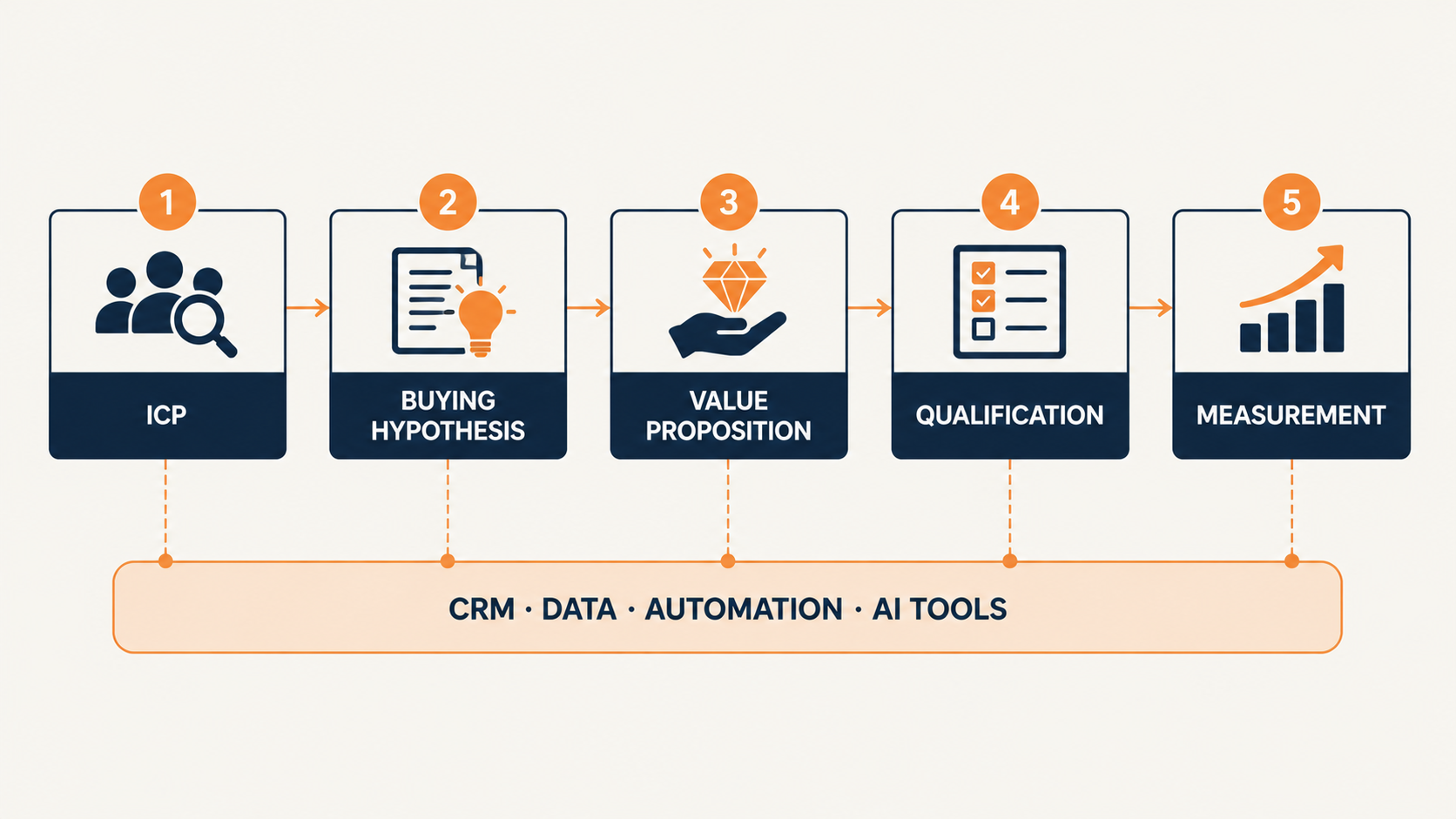
Establish a clear operating framework before adding more tools:
- Ideal customer profile and account selection criteria.
- Buyer personas and problem hypotheses.
- Offer positioning and messaging.
- Outreach sequences and channel selection.
- Qualification criteria and follow-up rules.
- Measurement and reporting standards.
Also, ensure your prospecting and outreach processes comply with applicable privacy, data protection and anti-spam requirements in each target market.
4. Measuring Activity Instead of B2B Sales Pipeline
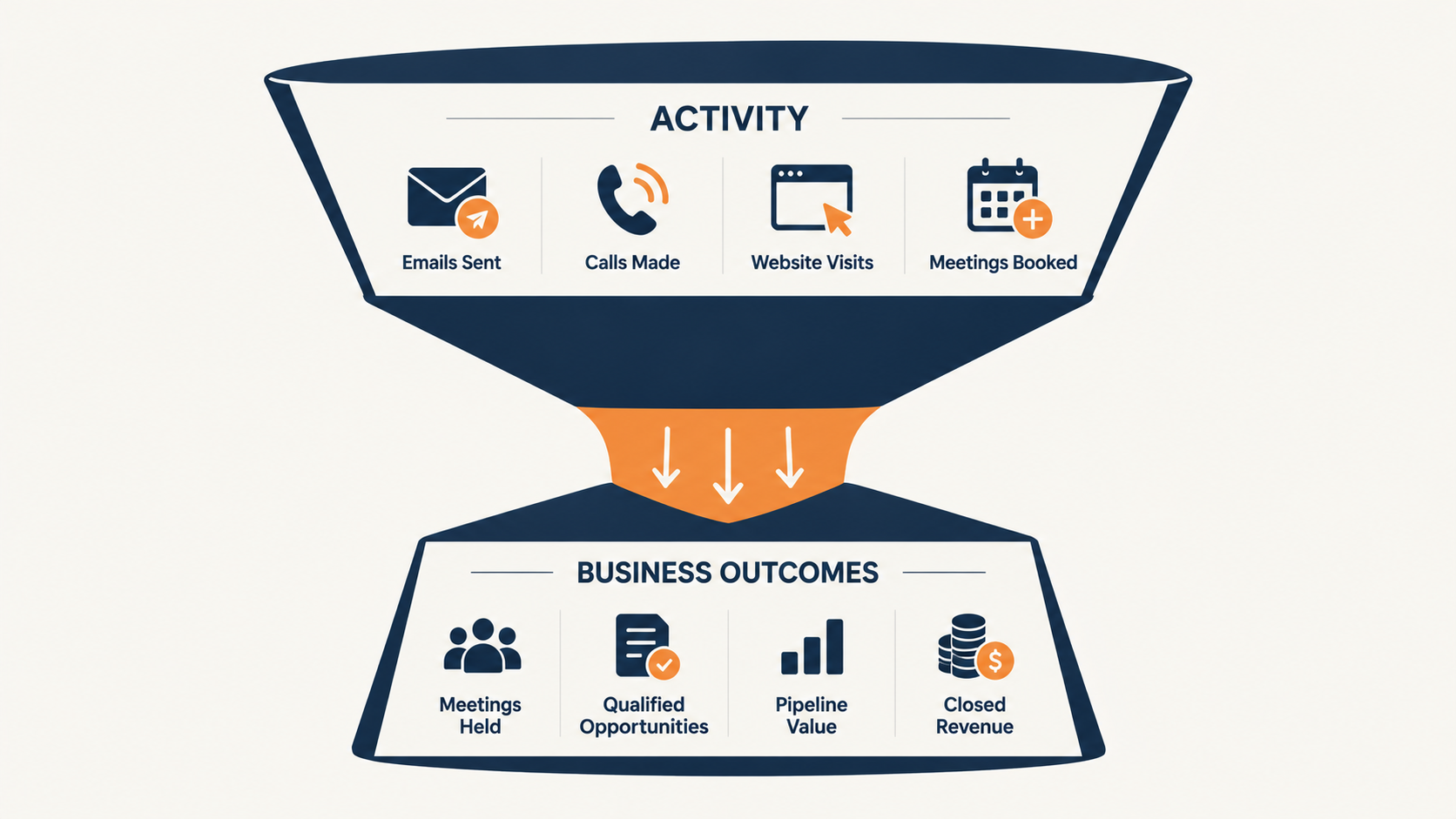
Email volume, connection requests and booked meetings measure activity. They do not necessarily demonstrate that lead generation is producing qualified sales opportunities.
Teams should evaluate both campaign execution and commercial outcomes.
How to fix it:
Track metrics such as:
- Meetings booked and meetings held.
- Percentage of meetings that match the ICP.
- Qualified opportunities created.
- Conversion rates between pipeline stages.
- Pipeline value and opportunity progression.
- Closed revenue and customer acquisition cost, where measurable.
Use consistent qualification criteria so sales and marketing evaluate lead quality in the same way. Salesforce also provides guidance on lead qualification.
5. Personalization Without Buyer Relevance
Adding a prospect’s first name, company name or recent LinkedIn post is not necessarily meaningful personalization. Effective outreach connects a relevant business observation to a problem the prospect may need to solve.
How to fix it:
Before sending a message, answer three questions:
- Why this company?
- Why this person?
- Why might this matter now?
Use relevant company context to develop a credible business hypothesis. Keep the message concise and make it easy for the recipient to decide whether the conversation is worth having.
6. Inconsistent Lead Qualification and Follow-Up
A positive reply or an introductory meeting does not automatically indicate a qualified opportunity. Without shared criteria, sales teams can waste time on prospects who lack a relevant need, suitable timing or decision-making authority.
How to fix it:
- Define what makes a lead qualified.
- Record the prospect’s business problem and current priorities.
- Establish clear next steps after each conversation.
- Follow up consistently without sending irrelevant messages.
- Nurture prospects who may be suitable later.
- Review disqualification reasons to improve targeting.
A consistent process helps the team distinguish between initial interest and genuine sales potential.
7. Disconnected Channels Weaken B2B Lead Generation
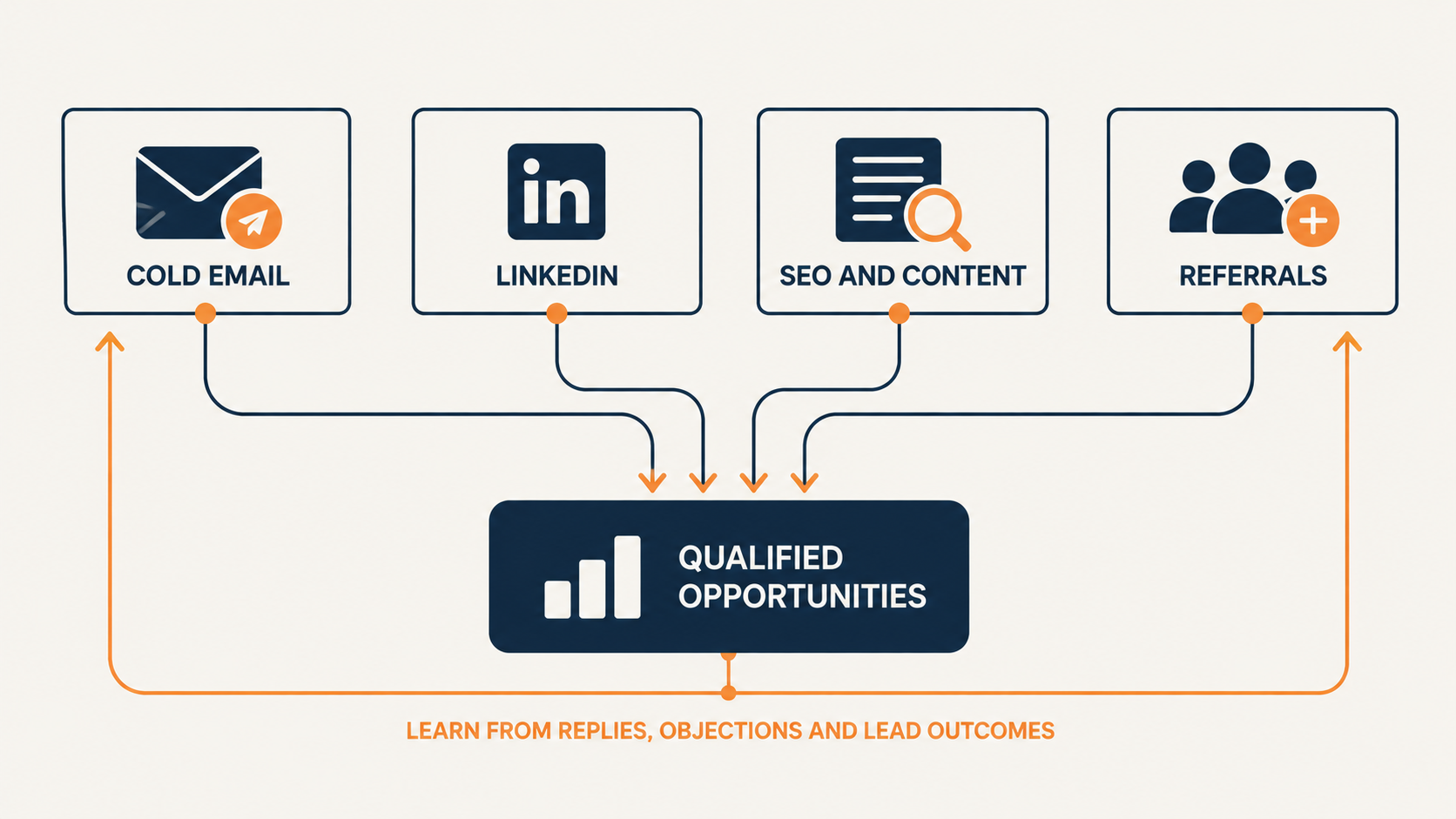
Cold email, LinkedIn outreach, content, paid campaigns, referrals and partnerships can support one another. When these channels operate independently, teams may use inconsistent messages, duplicate effort and miss opportunities to learn from buyer responses.
How to fix it:
- Align messaging around the same buyer problems and value proposition.
- Coordinate account selection across relevant channels.
- Use campaign responses to improve content and sales conversations.
- Keep prospect and opportunity records consistent.
- Evaluate which channels contribute to qualified opportunities.
A connected approach creates a clearer picture of what attracts the right buyers and moves them towards a sales conversation.
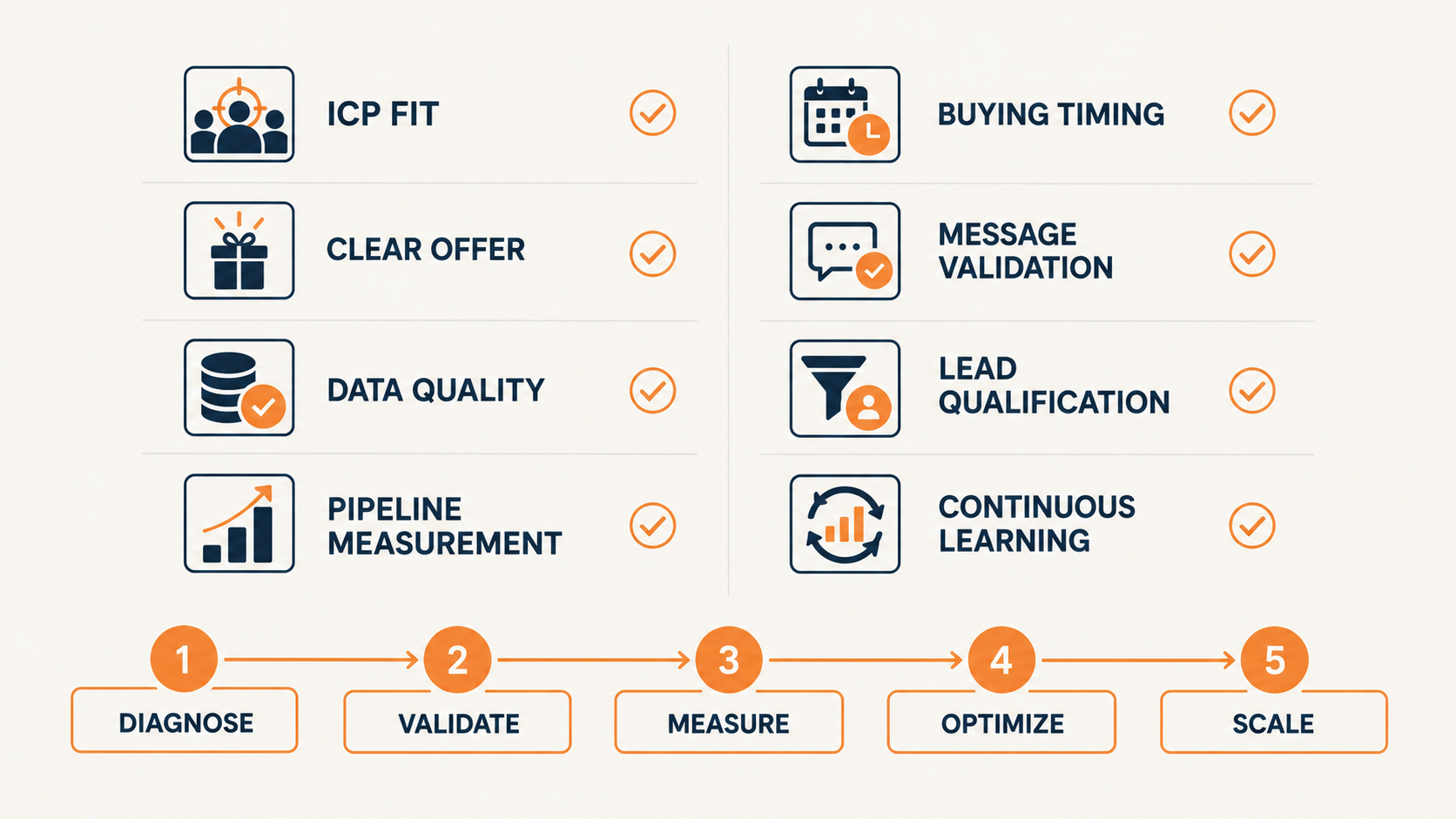
A Practical Checklist to Fix B2B Lead Generation
Before increasing campaign volume, review these fundamentals:
- ICP: Are we targeting the right companies and decision-makers?
- Timing: Is there a credible reason for contacting these accounts now?
- Offer: Is the business value clear and relevant?
- Validation: Have we tested the messaging with a focused audience?
- Data and execution: Are contact data, outreach processes and systems reliable?
- Qualification: Do we consistently identify genuine opportunities?
- Measurement: Are we tracking opportunity quality as well as activity?
- Learning: Are campaign results informing the next round of improvements?
The operating principle is straightforward: diagnose, validate, measure, optimize, then scale.
Do not immediately add more contacts, tools or channels when results are weak. First identify the weakest part of the process, test a targeted improvement and measure whether lead quality improves.
The approach may also differ by geography. Buyer expectations, outreach norms, privacy requirements and sales cycles can vary across the United States, United Kingdom, Canada, Australia, the UAE and South Africa.
Predictable lead generation does not mean guaranteeing a fixed number of meetings or deals. It means building a process that can be measured, improved and scaled based on evidence.
How to Improve Your B2B Pipeline Generation
If your team is generating activity but not enough qualified opportunities, reviewing the full outbound process can help identify where performance is breaking down.
Request a B2B pipeline assessment to review your targeting, messaging, outreach, qualification and measurement,and determine which improvements deserve attention first.
Frequently asked questions
Why does B2B lead generation fail?
B2B lead generation commonly fails because of unclear targeting, weak positioning, unvalidated offers, poor lead qualification, inconsistent follow-up or an overemphasis on activity rather than qualified pipeline.
Should a company buy more leads when lead generation is not working?
Not automatically. First assess the quality of existing data, the relevance of the offer, the targeting criteria and the conversion process. More leads may increase volume without improving commercial outcomes.
What should B2B teams measure in lead generation?
Teams should measure campaign activity alongside meetings held, ICP fit, qualified opportunities, stage conversion, pipeline value and closed revenue where available.
How can sales and marketing improve lead quality?
Sales and marketing should agree on the ICP, qualification criteria, messaging, handoff process and performance metrics. Regularly reviewing prospect feedback and opportunity outcomes helps both teams improve targeting and conversion.