

Outbound Sales vs. Inbound Marketing: Which Is Better for B2B Growth?
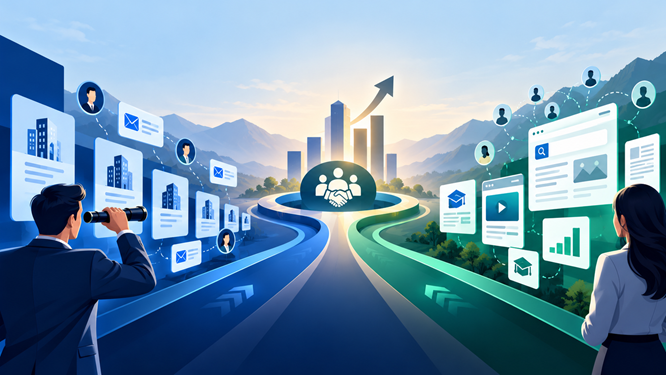
For a B2B technology company, understanding outbound sales vs inbound marketing is important for creating qualified opportunities now while building a dependable source of demand for the future.
Outbound sales and inbound marketing contribute to that goal in different ways. Outbound gives a company a proactive route to a defined list of potential buyers. Inbound marketing earns attention through useful content, search visibility and other resources that help buyers discover and evaluate a solution. The right balance depends on your market, resources and growth horizon.
What is the difference?
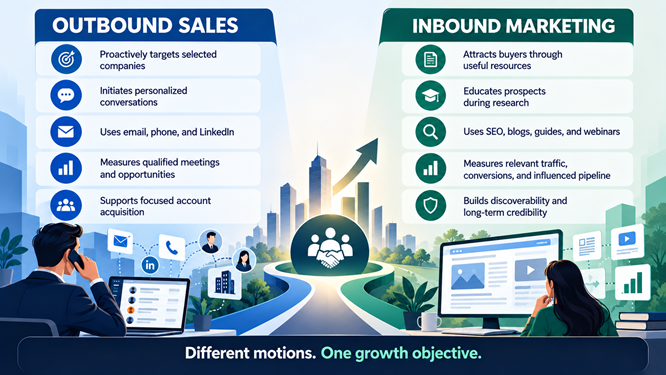
Outbound sales is a sales-led motion: a team identifies target accounts and initiates conversations through channels such as personalized email, phone and LinkedIn. It can be useful when a company knows which organizations it wants to reach but cannot rely on those buyers to discover it organically.
Inbound marketing is a marketing-led approach that attracts and educates potential buyers through content, search engine optimization, webinars, newsletters and other helpful resources. Inbound sales is the follow-up process when a prospect initiates contact or signals interest,for example, by requesting a demo. These terms are connected, but they are not interchangeable.
Neither approach guarantees revenue. Outbound can create conversations with a carefully selected audience, but poor targeting or generic messages will waste effort. Inbound can build credibility and capture existing demand, but it needs consistent investment and may not reach a narrow set of target accounts quickly.
Understanding outbound sales vs inbound marketing helps B2B companies decide how to reach target buyers, build trust and create qualified sales opportunities
Outbound sales vs. inbound marketing: a practical comparison
Use this comparison to choose where to put your first effort. It describes typical differences, not universal outcomes.
Dimension | Outbound sales | Inbound marketing |
Primary role | Initiate conversations with selected target accounts | Attract and educate buyers through useful resources |
Best starting condition | You can define target companies and relevant decision-makers | Buyers actively research the problem or category |
Typical channels | Personalized email, phone, LinkedIn, account-based outreach | SEO, blog content, guides, webinars, email nurture |
Near-term control | More direct control over which accounts are approached | Reach depends on discovery, distribution and existing demand |
Long-term contribution | Builds account knowledge and repeatable prospecting | Builds discoverability, trust and reusable content assets |
Key measures | Qualified meetings, opportunities, pipeline value, revenue | Relevant traffic, conversions, lead quality, influenced pipeline |
Common risk | Poor targeting, generic messaging, weak follow-up | Inconsistent publishing, weak distribution, slow learning |
When Outbound Sales Is the Better Starting Point
Outbound is often a practical starting point when near-term pipeline creation is a priority and your team can clearly define its ideal customer profile (ICP). This is especially relevant for B2B SaaS, cybersecurity, IT services and AI companies selling to identifiable organizations or decision-makers.
For example, a cybersecurity consultancy entering the UK market may know it wants to work with mid-market financial services firms. A targeted outbound program can identify relevant accounts, research buying triggers and start conversations with security or technology leaders. The team can learn from replies and meetings, then refine its positioning.
This is an illustrative example, not a promised result. Outbound does not mean sending more messages indiscriminately. It means making a reasoned choice about whom to contact, why the offer may matter now, and what useful next step to propose.
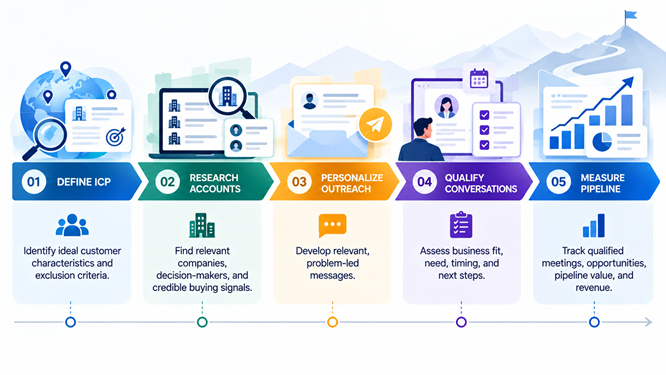
A disciplined outbound motion should include:
- A defined ICP and account list, including company fit, relevant roles and exclusion criteria.
- A clear problem-led message tied to a plausible business priority or observable trigger.
- A respectful, relevant multi-touch sequence across appropriate channels.
- Measurement beyond activity volume: positive replies, qualified meetings, opportunities created, pipeline value and eventual revenue.
- To understand how responsible outreach works, review Filesie’s cold email compliance policy.
Where inbound marketing earns its place
Inbound marketing becomes increasingly important when buyers research solutions independently, compare vendors carefully, or need education before speaking with sales. Strong content can answer questions, demonstrate expertise and give prospects a reason to trust a company before a sales conversation begins.
For a B2B software provider, this might mean publishing practical guides, product comparison pages, technical explainers and customer proof that addresses the questions buyers ask during evaluation. Search visibility and useful resources can continue attracting relevant visitors beyond the moment a campaign is launched.
HubSpot explains how inbound marketing attracts, engages and builds relationships with potential customers through valuable content and experiences.
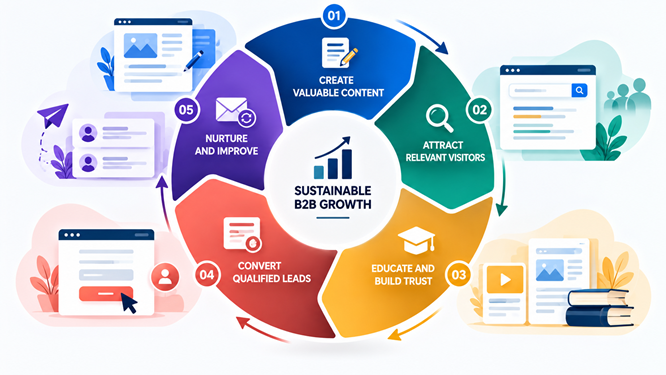
The trade-off is that inbound assets generally require sustained work. Publishing one blog post or launching a new website does not guarantee qualified demand. Results depend on content quality and relevance, distribution, search competition, brand credibility and the conversion path.
A decision checklist for B2B leaders
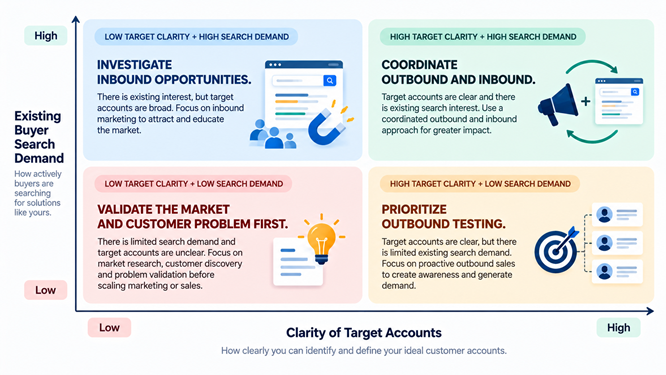
Before choosing a primary motion, answer these questions honestly:
- Do we know exactly which companies and roles are most likely to buy? If yes, outbound can test that hypothesis directly.
- Do target buyers already search for the problem or compare solutions online? If yes, invest in inbound content that meets those questions.
- Do we need to learn quickly which segment, message or offer resonates? A tightly scoped outbound test can generate direct market feedback.
- Can we consistently create credible, useful content and distribute it? If not, avoid treating inbound as a quick fix.
- Can sales and marketing share definitions of a qualified lead, meeting and opportunity? If not, align measurement before scaling either motion.
If your answers point in both directions, that is normal. The aim is not to choose a permanent winner; it is to assign each channel a clear role.
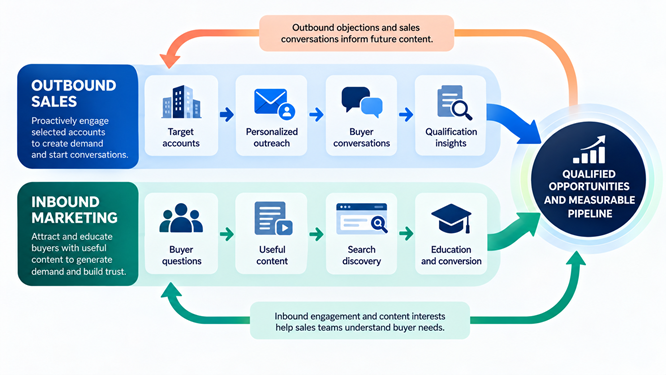
Build a connected pipeline, not two separate programs
A practical sequence for many growing B2B companies is to use targeted outbound to start conversations with priority accounts while developing inbound assets that answer the questions those buyers raise. Outbound insights can reveal recurring objections and language that should inform future content. Inbound engagement can, in turn, help sales teams understand which topics or problems are attracting attention.
Start with a manageable test. Define a target segment, establish a baseline, run a focused outreach program and track the quality of conversations,not just the number of emails sent. In parallel, create a small set of high-value pages or resources around the problems that segment cares about. Review results at regular intervals and adjust based on evidence.
The right channel mix will change as your company gains recognition, learns its market and develops more resources. What matters is a measurable process connecting audience selection, relevant engagement, qualification and follow-up.
The Filesie perspective
For technology companies that need to create a near-term B2B pipeline, Filesie recommends starting with a clear ICP and a focused outbound plan when the target accounts are identifiable and the offer is ready to test. Inbound marketing should support that effort by strengthening credibility, answering buyer questions and capturing demand as it develops.
There is no universal ratio or guaranteed timeline. The appropriate plan depends on your sales cycle, deal value, audience, available resources and current level of market awareness.
Request a B2B pipeline assessment from Filesie to identify your priority audience, evaluate your current pipeline approach and determine where outbound, inbound or a coordinated mix deserves attention.
Frequently asked questions
Is outbound sales better than inbound marketing?
Not in every situation. Outbound can be a practical starting point when you can identify target accounts and need to create conversations proactively. Inbound is valuable for attracting and educating buyers over time. Many B2B companies benefit from using both with clear objectives.
Does inbound marketing mean sales teams wait for leads?
No. Inbound marketing attracts and educates potential buyers, while inbound sales responds to prospects who initiate contact or signal interest. Sales teams can still proactively pursue target accounts while marketing develops inbound demand.
How should a company measure outbound?
Track positive response, qualified meetings, opportunities created, pipeline value, conversion through stages and revenue. Use activity metrics as diagnostics, not as proof of business impact.
Can a small B2B company use both approaches?
Yes, if scope is realistic. A small team can run focused outbound to learn from a defined market while publishing a limited number of useful, buyer-focused resources. Prioritize consistency and measurement over trying to do everything at once.