
Measuring Pipeline Quality: Why Qualified Opportunities Matter More Than Lead Volume
Introduction
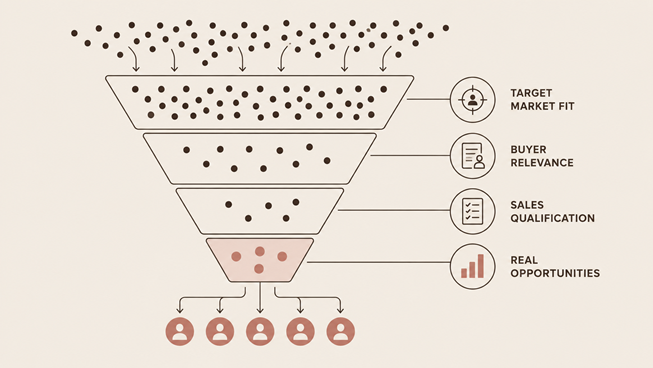
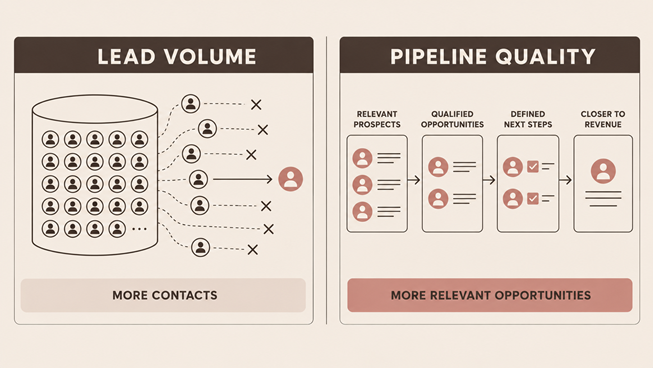
Lead volume is a count: how many contacts entered the funnel during a period. Pipeline quality is an assessment of whether those contacts fit the target market, show meaningful interest, have a problem the business can solve and progress through the sales process.
Neither measure is useless. Volume helps teams understand whether enough potential buyers are entering the system. Quality shows whether those buyers are likely to become commercial opportunities. The mistake is treating a high lead count or low cost per lead as proof of sales effectiveness. Alltake’s discussion of why pipeline quality matters more than lead volume makes a similar distinction between top-of-funnel activity and opportunities that can advance.
Lead Volume vs. Pipeline Quality: Understand the Difference
Lead volume is a count: how many contacts entered the funnel during a period. Pipeline quality is an assessment of whether those contacts fit the target market, show meaningful interest, have a problem the business can solve and progress through the sales process.
Neither measure is useless. Volume helps teams understand whether enough potential buyers are entering the system. Quality shows whether those buyers are likely to become commercial opportunities. The mistake is treating a high lead count or low cost per lead as proof of sales effectiveness. Alltake’s discussion of why pipeline quality matters more than lead volume makes a similar distinction between top-of-funnel activity and opportunities that can advance.
1. Define What a Qualified Lead Means
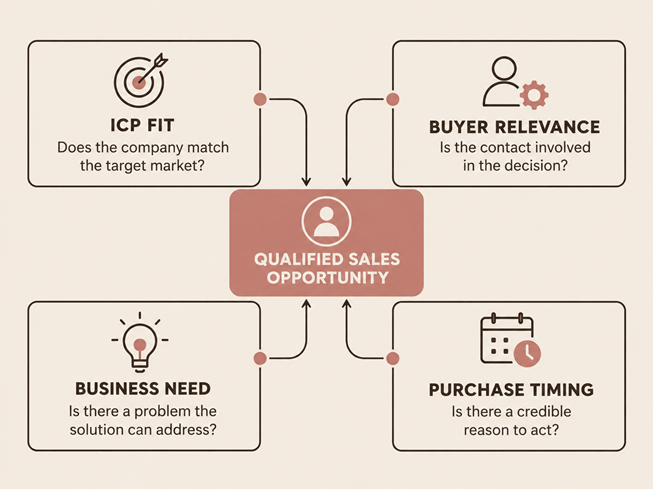
Quality cannot be measured consistently until marketing and sales agree on the definition. Start with the ideal customer profile: industry, company size, geography, business model and other firmographic characteristics that indicate a plausible fit. Then define buyer-level criteria, such as job role, influence over the decision and relevance to the problem being solved.
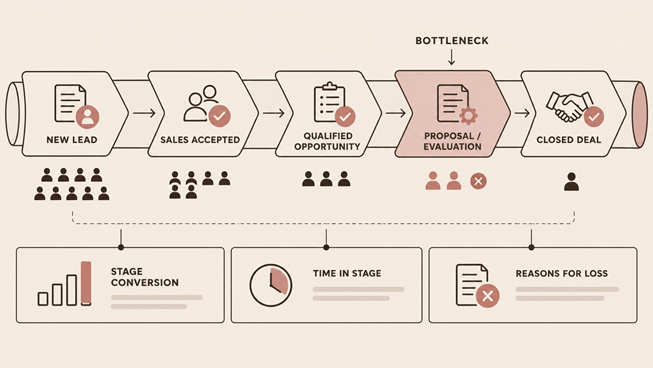
Add evidence of need and timing. A prospect may match the company profile but have no current reason to act. Conversely, a person who downloads a resource may be curious rather than purchase-ready. Document the signals that matter and distinguish an inquiry, a marketing-qualified lead, a sales-accepted lead and a sales-qualified opportunity. The labels matter less than shared, observable criteria.
2. Track the Metrics That Reveal Pipeline Quality
Use a small set of connected measures rather than a long dashboard of disconnected activity counts:
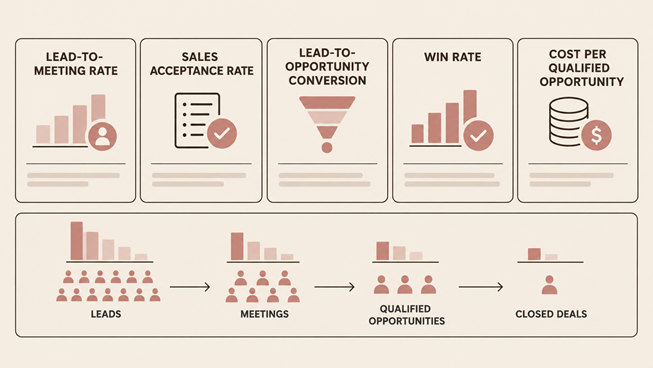
- Lead-to-conversation rate: the share of leads that result in a genuine two-way interaction.
• Lead-to-meeting rate: the share that book and attend a relevant meeting.
• Sales acceptance rate: the share of leads sales accepts as worth pursuing.
• Lead-to-opportunity conversion: the share that become qualified opportunities in the CRM.
• Stage conversion rate: the percentage of opportunities that advance from one defined stage to the next.
• Win rate and sales cycle: the share of opportunities won and the time required to close them.
• Cost per qualified opportunity: acquisition spend divided by the number of qualified opportunities created.
Surface Labs’ guide to measuring lead quality, not just lead volume also emphasizes connecting lead capture to conversations, meetings and pipeline outcomes. The exact metrics and targets should reflect your sales model; do not adopt generic benchmarks without checking your own historical data.
3. Segment Results by Source, Audience and Campaign
An overall conversion rate can hide important differences. Break results down by channel, campaign, industry, company size, geography, buyer role and offer. This helps answer practical questions: Are referrals producing fewer but stronger opportunities? Does outbound email reach the right decision-makers? Are paid campaigns attracting people who fit the ICP? Which segments progress beyond the first meeting?
Compare cost per lead with cost per meeting and cost per qualified opportunity. A channel with a higher initial lead cost may produce stronger opportunities and better economics later. Avoid declaring a winner based only on the cheapest contact or the highest response rate.
4. Measure Pipeline Movement, Not Just Pipeline Size
A healthy pipeline is not simply large; opportunities should move forward when buyers complete meaningful steps. Track stage entry dates, time spent in each stage, next-step dates, conversion rates and reasons for loss or disqualification. Deals that remain unchanged for long periods may indicate weak qualification, missing stakeholders, unclear value or a lack of urgency.
Salesforce’s guide to building a healthy sales pipeline recommends monitoring qualification, pipeline flow, conversion and sales velocity. Use stage definitions that describe buyer progress, not just sales-representative activity. A meeting held should not automatically mean an opportunity has advanced.
5. Connect Marketing and Sales Data
Pipeline quality is a shared responsibility. Marketing needs visibility into what happens after a lead is generated; sales needs to record outcomes consistently. Use CRM fields for source, campaign, ICP fit, qualification status, opportunity stage, disqualification reason and next step. Agree on response-time expectations and a feedback process for rejected or recycled leads.
Review the data together. If a campaign produces many leads but few sales conversations, investigate targeting, contact accuracy, routing and follow-up speed before simply increasing spend. If meetings happen but opportunities do not emerge, review qualification and discovery. If opportunities stall later, examine buyer access, value alignment and decision processes.
A Practical Monthly Pipeline Quality Review
Once a month, review four questions: Are we attracting the right accounts? Are leads becoming real conversations? Are qualified conversations turning into opportunities? Are those opportunities progressing and converting? Compare results with prior periods and by source, then choose one or two changes to test.
Do not abandon volume targets entirely. Instead, treat volume as an input and quality as the test of whether that input is useful. The objective is not the smallest possible lead list; it is a sufficient flow of relevant prospects that can realistically become customers.
Conclusion: Optimize for Opportunities, Not Applause
A large lead number can look impressive while concealing weak targeting, poor follow-up and low conversion. Measuring pipeline quality gives leadership a more useful view: which sources create qualified conversations, which opportunities progress and where the sales process loses momentum. When marketing and sales use shared definitions and reliable CRM data, they can make better decisions about targeting, budgets and capacity.
Want to improve the quality of your B2B pipeline? Explore Filesie’s cold email outreach service or visit Filesie to discuss target-account selection, outreach, qualification and pipeline measurement.
Frequently Asked Questions
What is pipeline quality?
Pipeline quality measures how well potential customers fit the target market, show a relevant need and progress through defined sales stages towards a realistic purchase decision.
Which is more important: lead volume or lead quality?
Both matter, but volume should be interpreted alongside qualification and conversion. A steady supply of relevant leads is more valuable than a large number that rarely become opportunities.
What is the most useful metric for measuring lead quality?
There is no single universal metric. Lead-to-meeting, lead-to-opportunity conversion, sales acceptance and cost per qualified opportunity together provide a more complete picture.
How often should pipeline quality be reviewed?
Review leading indicators weekly and conduct a deeper monthly review by source, segment and stage. Longer sales cycles may require cohort-based analysis so leads have enough time to progress.