From Prospecting to Pipeline: A Repeatable Sales Development Process
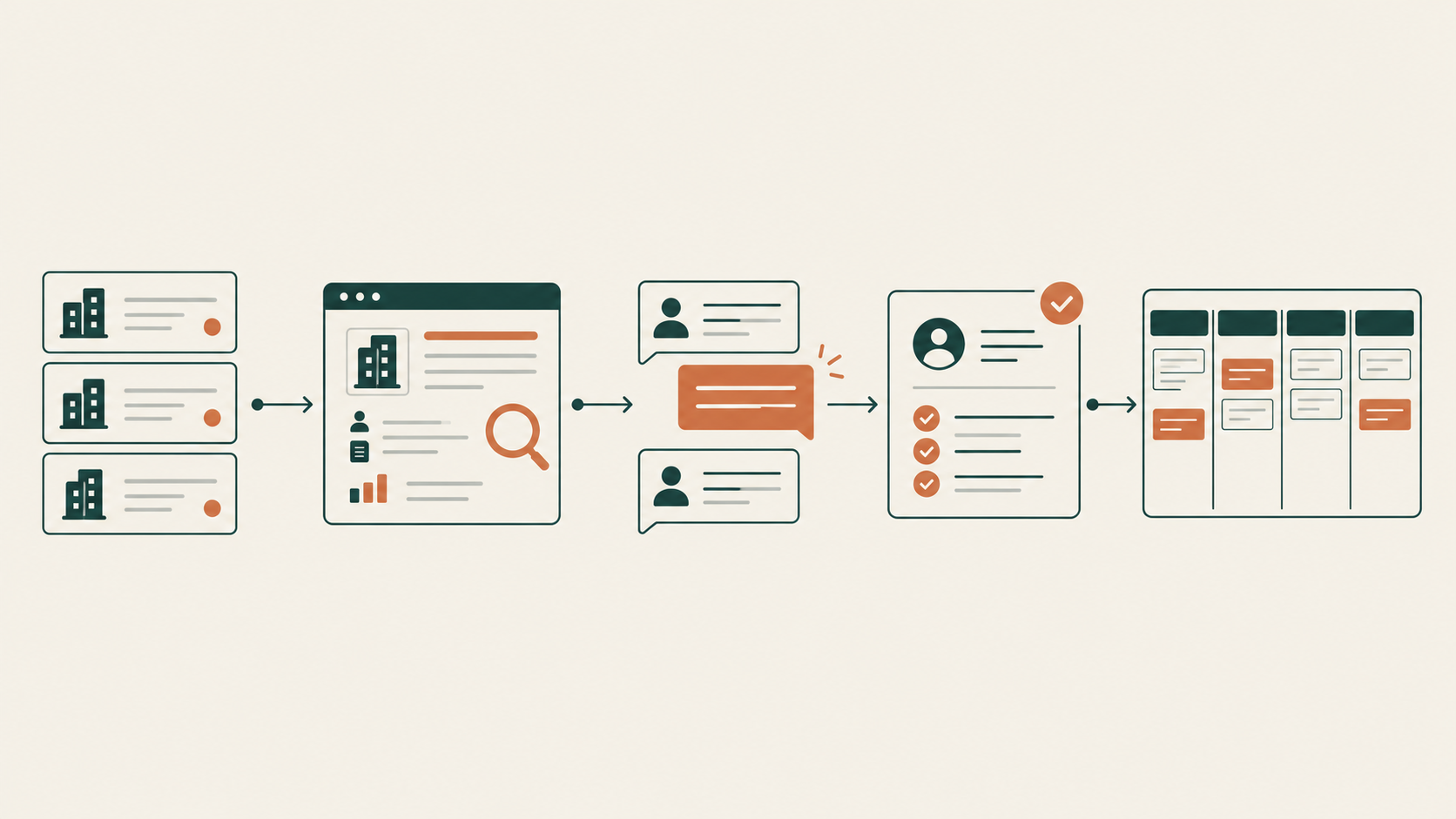
A repeatable sales development process helps B2B teams turn prospecting activity into qualified sales opportunities. Without a defined process, one representative may research accounts carefully while another sends generic messages. Some leads are qualified before a meeting, while others reach a sales call with little context. Follow-up can depend on individual habits rather than a shared system.
A structured sales development process replaces this inconsistency with clear stages, ownership and measurable next steps. It does not make every deal predictable or turn selling into a script. Instead, it helps a team consistently identify suitable buyers, start relevant conversations and move qualified opportunities forward.
For B2B technology, IT services, SaaS, AI and cybersecurity teams, this six-step checklist provides a practical starting point for building a more consistent sales pipeline.
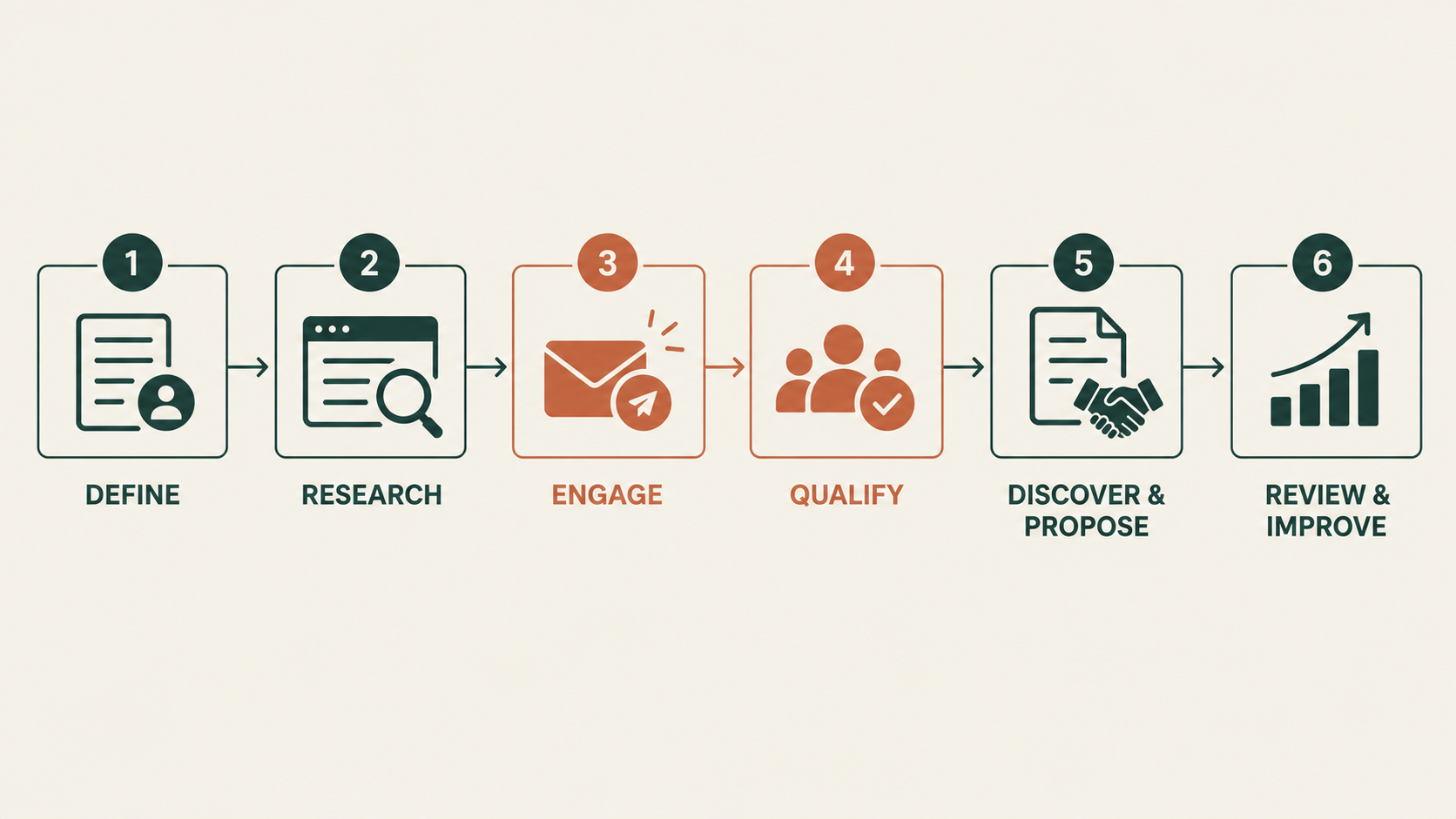
1. Define Your Ideal Customer Profile for Sales Development
Before building a list, agree on your ideal customer profile (ICP). Identify the company types, size, geography, business model and conditions that make your offer relevant. Then define the roles likely to feel the problem, influence the decision or approve a purchase.
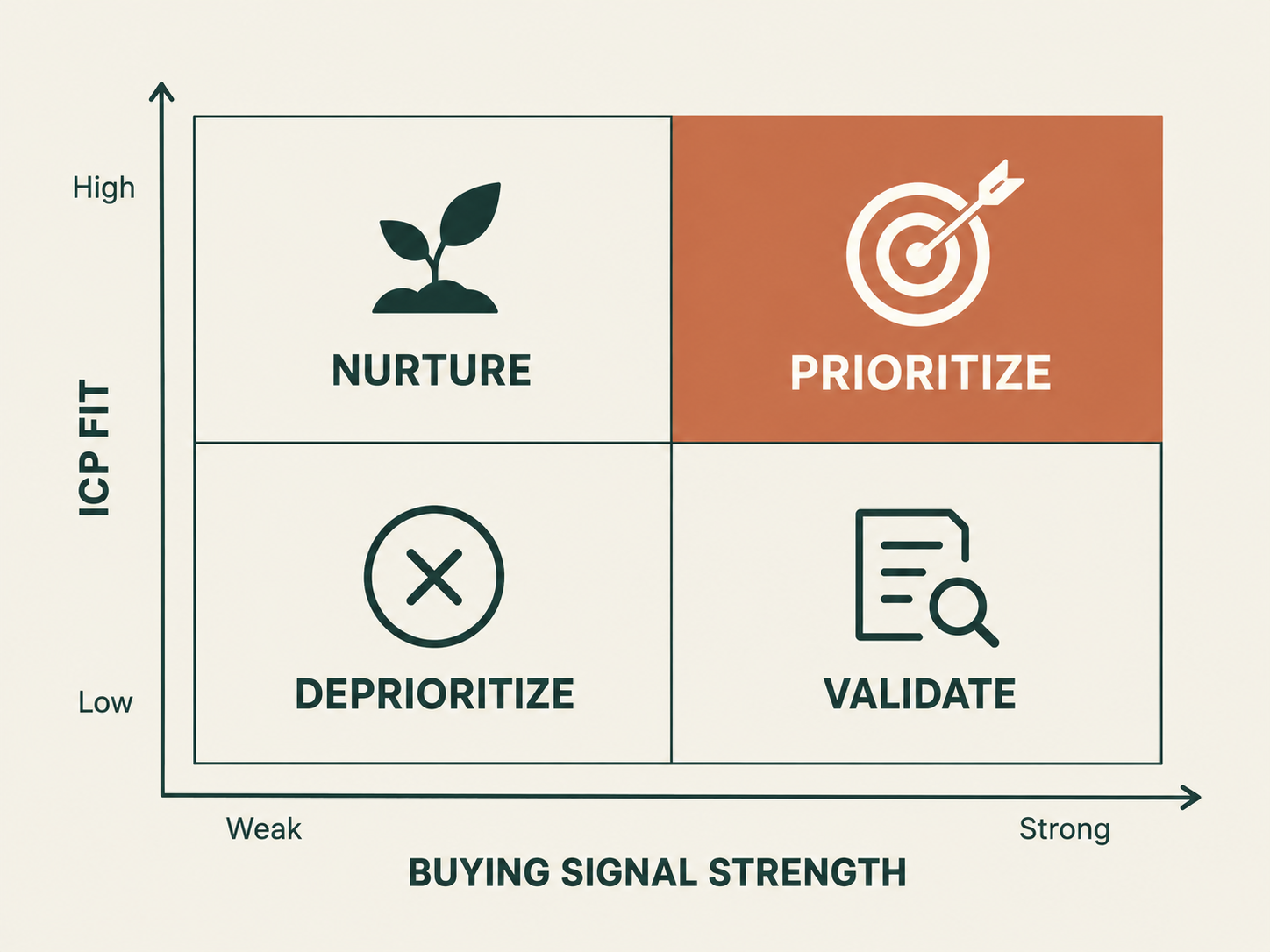
Keep the definition specific enough to guide research, but treat it as a hypothesis to test. Add relevant buying signals, such as expansion, a new product launch or a changing operational requirement, where evidence supports them. The aim is not simply to find contacts; it is to understand why a particular account may be a fit.
2. Research and Prioritize Accounts Through a Structured Prospecting Process
Create a focused account list and gather only information that helps you make a relevant approach. Check the company’s services, markets, likely business priorities and recent developments. Identify the right contact and verify their role and contact details.
Prioritize accounts using consistent criteria, such as fit, strength of the business problem, timing signals and access to relevant decision-makers. Record the reason each account belongs on the list. This makes prioritization explainable and helps the team learn which signals correlate with meaningful conversations.
For additional guidance, see Salesforce’s guide to B2B sales prospecting.
3. Start Relevant Conversations With a Consistent Outreach Process
Choose an appropriate channel—email, phone, LinkedIn, referral or a combination—and adapt the message to the context. Effective outreach explains why you are contacting this person, connects to a plausible business issue and offers a clear, low-friction next step. Personalization should make the message more relevant, not merely insert a name or mention a recent post.
Use a documented sequence with sensible spacing and clear stop rules. Respect opt-outs, privacy requirements, anti-spam laws and each platform’s rules in the markets you serve. Track responses and objections so messaging improves with evidence rather than guesswork.
4. Qualify Prospects Before Advancing the Sales Pipeline
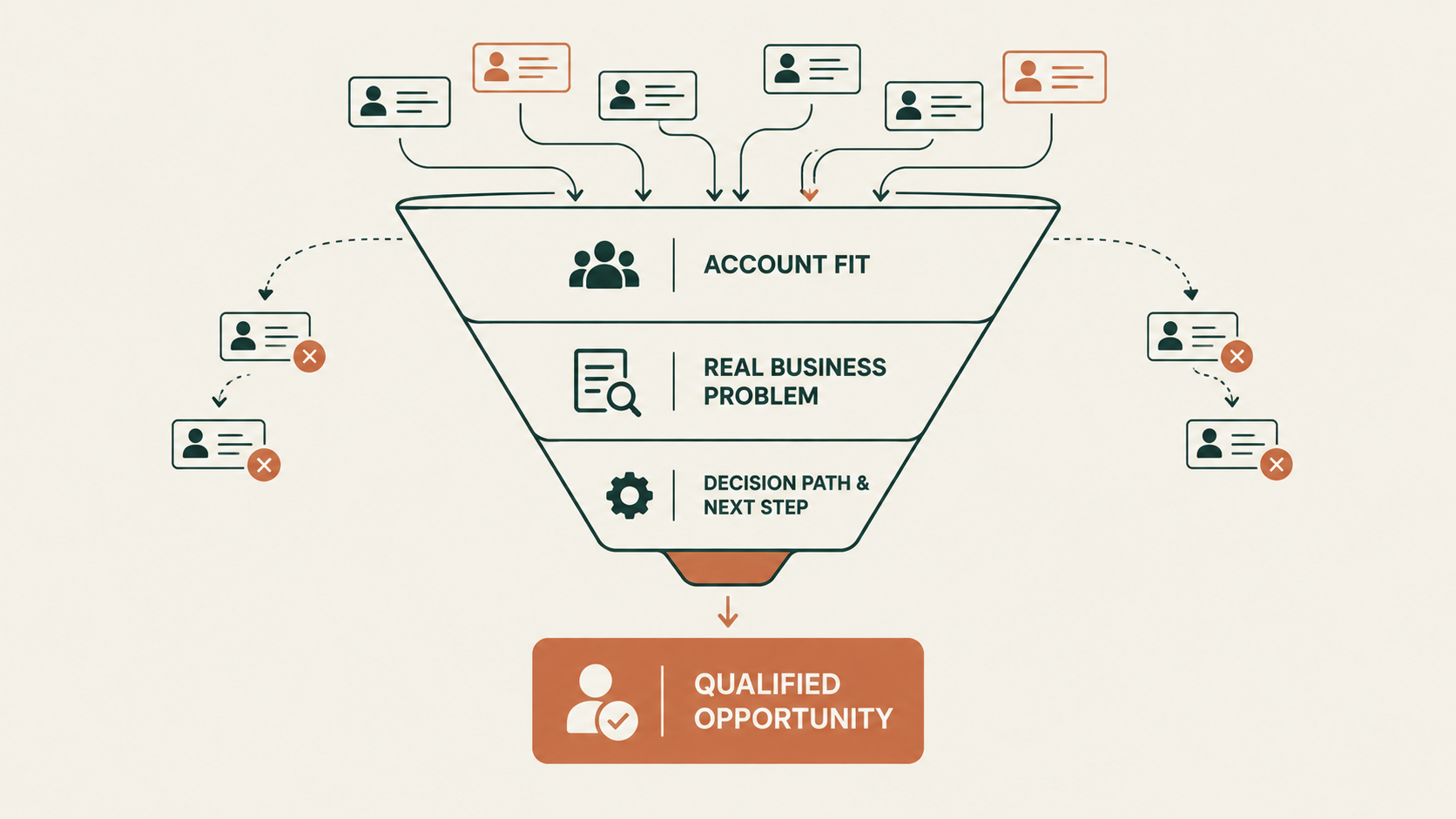
A reply or booked meeting is not automatically a sales-qualified opportunity. Establish whether the account fits, whether a problem exists that your solution can address, who is involved in the decision and whether there is a plausible next step. Ask questions conversationally; qualification should feel like a useful discussion, not an interrogation.
If there is a fit but no immediate priority, agree on an appropriate follow-up or nurture path. If there is no fit, record the reason and move on. Clear qualification protects the prospect’s time and prevents the pipeline from filling with opportunities that are unlikely to progress.
Salesforce explains the role of need, budget, timing and decision-making authority in its guidance on building a sales process.
5. Use Discovery to Build Value and Agree on Next Steps
Once qualified, use discovery to understand the current situation, impact of the problem, desired outcome, constraints and decision process. Reflect the prospect’s priorities back to them before recommending a solution. A proposal should connect the scope, expected deliverables, responsibilities, timeline and commercial terms to the problem discussed.
End every substantive conversation with a mutually understood next step and owner. That may be a technical review, stakeholder meeting, proposal revision or decision date. Send a concise recap and deliver any promised information promptly. Advance a deal in the CRM when the agreed stage criteria are met, not merely because a meeting occurred.
6. Measure Sales Development Performance and Improve the Process
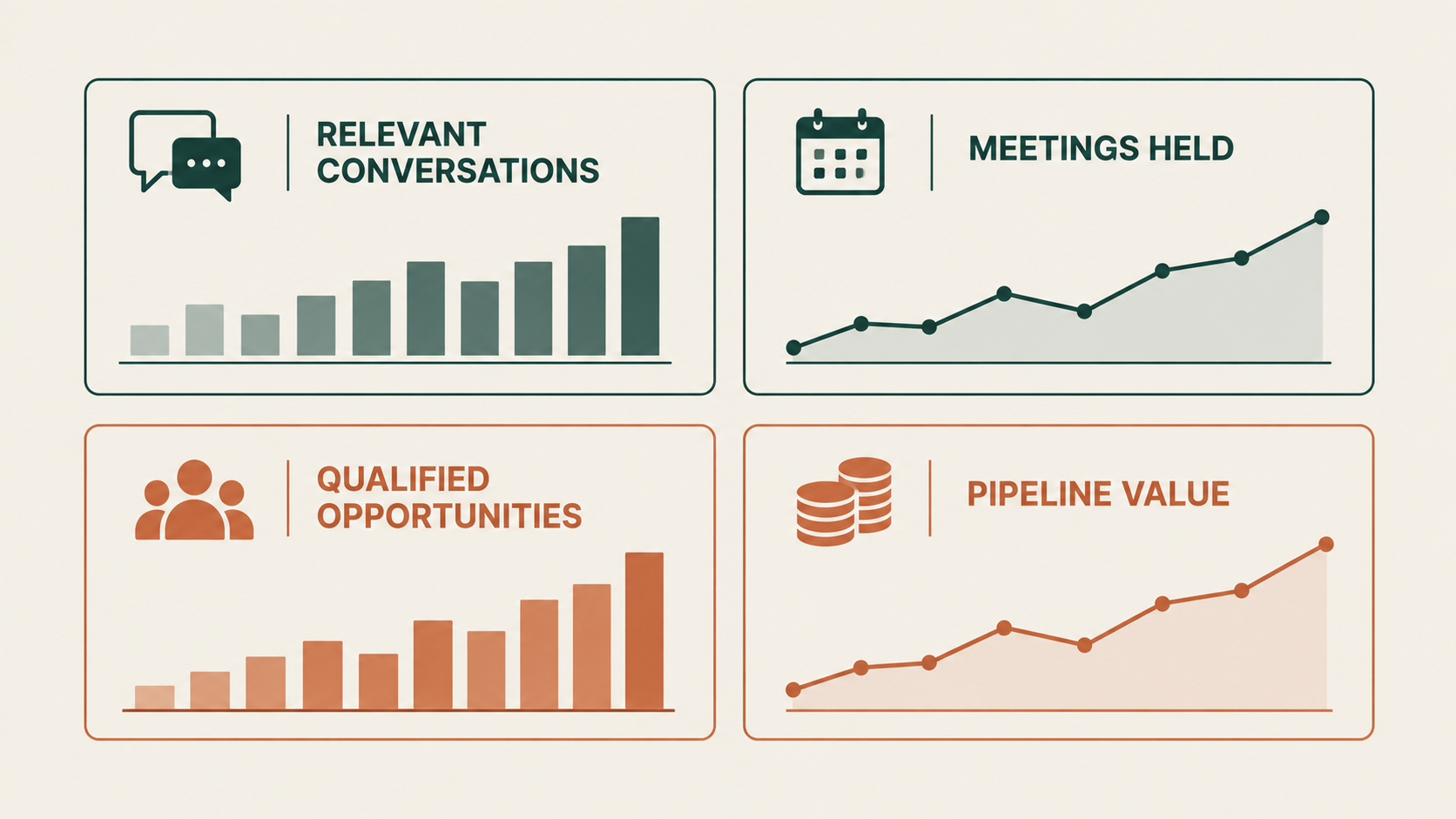
A repeatable sales development process needs feedback. Track leading indicators, such as accounts researched and relevant conversations started, alongside outcomes: meetings held, qualified opportunities created, stage conversion, pipeline value and closed revenue when the sales cycle allows. Use activity metrics to diagnose execution, not as a substitute for commercial results.
Review where prospects stall, which reasons for disqualification recur and which messages lead to meaningful conversations. Update the process when evidence suggests a change, document the new standard and coach the team on it. Salesforce’s sales-process guidance similarly emphasizes research, prospecting, qualification, sales conversations, closing and continued improvement.
Sales Development Process: A Simple Implementation Checklist
- Define the ICP, buyer roles and qualification criteria.
- Document each stage, its owner and the evidence required to move forward.
- Use consistent CRM fields and record next steps after every meaningful interaction.
- Review activity and outcome metrics together on a regular schedule.
- Share feedback between sales development, sales and marketing.
The strongest sales development process is not necessarily the most complicated. It is the one a team can follow, measure and improve without relying on one person’s memory or instinct. Start with a manageable version, identify bottlenecks and refine it as your market knowledge grows.
Want to make your sales development process more consistent? Book a sales development strategy call with Filesie to discuss your target accounts, prospecting workflow, qualification criteria and pipeline goals.
Frequently Asked Questions About the Sales Development Process
What is a sales development process?
A sales development process is a documented set of activities and decision criteria that helps a team identify potential buyers, engage them, qualify interest and create a useful handoff into the sales process.
What is the difference between a sales process and a sales methodology?
The process defines the stages and expected outcomes. A methodology describes how a salesperson conducts the work within those stages.
How often should a sales development process be reviewed?
Review performance regularly enough to spot bottlenecks, and update the process when conversion data, buyer feedback, product changes or market conditions justify it.